


When Peace Becomes More Profitable Than War: The Economic Logic of the Azerbaijan–Armenia Settlement
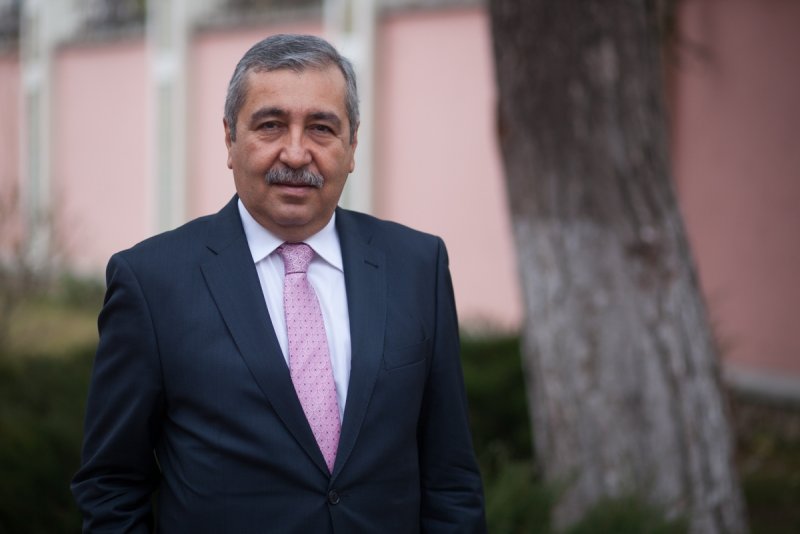
Author: Namiq Aliyev, Doctor of Law, Professor, Ambassador Extraordinary and Plenipotentiary, Head of the Department of International Relations and Foreign Policy at the Academy of Public Administration under the President of the Republic of Azerbaijan
From the European Experience to the South Caucasus
There is an important lesson in the history of international relations that often remains overshadowed by diplomatic formulas and political declarations: lasting peace emerges when states not only agree not to wage war, but also create a system of mutual interests in which war itself becomes economically irrational.
After the Second World War, Europe faced precisely this challenge. It was not enough to defeat Nazi Germany, demilitarise it and sign peace agreements. A new political and economic architecture had to be created that would prevent Europe from returning to its previous logic of confrontation.
A crucial element in achieving this objective was the decision to bind former adversaries together through economic interests.
On 9 May 1950, French Foreign Minister Robert Schuman proposed placing French and German coal and steel production under the administration of a common supranational authority. This proposal became one of the starting points of European integration.
The logic behind Schuman’s idea was profoundly pragmatic: if states jointly controlled the industries that formed the basis of military production, war between them would become not merely politically undesirable but materially impossible.
In West Germany, a new model of relations between the state, society and the armed forces was created. The Bundeswehr, established in 1955, was integrated into a system of political and legal oversight. The principle of Innere Führung — “internal leadership” — was intended to preserve the status of the serviceman as a citizen in uniform, while the use of the armed forces was placed under parliamentary control.
It is here that one of the most important lessons for the South Caucasus can be found.
From Peace on Paper to Peace Embedded in the Economy
Azerbaijan and Armenia today are at a completely different historical stage from France and Germany after 1945. Their history, the scale of the conflict and the international context are different. It would therefore be a mistake to mechanically transfer the European model to the South Caucasus.
Yet the underlying logic of the European experience is entirely applicable.
Peace between Azerbaijan and Armenia should not merely be a diplomatic agreement signed by the leaders of the two states. It should gradually evolve into a system of political, transport, energy, trade and human connections whose destruction would cause damage primarily to the parties to the conflict themselves.
In other words, the objective is gradually to create a situation in which it becomes evident to Armenian society and the Armenian state that peace brings real income, jobs, investment, transit opportunities and security, whereas confrontation means losing all of these benefits.
That is far more powerful than any declaration.
On 8 August 2025 in Washington, Azerbaijan and Armenia achieved a major political breakthrough: the foreign ministers of the two countries initialled the agreed text of the Agreement on the Establishment of Peace and Interstate Relations. The joint declaration also emphasised the importance of opening communications between the two countries for international, bilateral and domestic transportation on the basis of respect for state sovereignty, territorial integrity and jurisdiction.
A special place within this framework is occupied by the TRIPP project — the Trump Route for International Peace and Prosperity.
The very name of the project is highly symbolic: a “route for international peace and prosperity.”
TRIPP: When a Transport Corridor Becomes an Instrument of Peace
Under the old logic of conflict, communications were regarded primarily as strategic assets. Roads, railways, energy lines and transport hubs became objects of competition because controlling communications meant controlling territories and economic flows.
The new logic should be the opposite.
Communications should connect states so closely that their uninterrupted operation becomes a common interest.
This is why TRIPP matters far beyond the construction of another transport line. Under the agreements reached, the project envisages the creation of a multimodal transit connection through Armenian territory that would link the main territory of Azerbaijan with the Nakhchivan Autonomous Republic while simultaneously becoming part of the broader Trans-Caspian International Transport Route. At the same time, the official documents emphasise the preservation of Armenia’s sovereignty, territorial integrity and jurisdiction.
This is fundamentally important.
For decades, communications between Azerbaijan and Nakhchivan existed within an environment of political and military confrontation. There is now an opportunity to transform this geographical feature from a source of tension into a source of mutual benefit.
And the benefits are not limited to Azerbaijan.
For Armenia, the opening of communications offers an opportunity to transform its position as a country located to a certain extent on the periphery of major regional trade routes into an advantage.
What is required is a change in the model of behaviour itself.
Armenia as a Transit Country
The historical geography of the South Caucasus has not disappeared. Armenia is located between Türkiye, Azerbaijan, Iran and Georgia. The Black Sea and the Caspian Sea are nearby, while Azerbaijan and Türkiye provide access towards Central Asia, Russia, Iran and European markets.
For decades, however, political and armed conflicts transformed this geography from an advantage into a constraint.
A closed border is not merely a diplomatic problem. It means lost transit, lost investment, more expensive logistics, a restricted market and lost jobs. Ultimately, it means lost development opportunities.
The opening of communications can therefore change not only Armenia’s foreign-policy environment but also the economic incentives of the Armenian state.
If international railway and road routes, communication lines, energy projects and other infrastructure pass through Armenian territory, stability will cease to be an abstract diplomatic aspiration. It will become an economic asset.
Conversely, any new crisis would mean that Armenia itself risks losing investment, transit revenues, international contracts and access to regional markets.
This is how what might be described as an economic immunity against war can gradually be created.
Türkiye as a Key Element of the New Economic Geography
Türkiye has a particularly important role in this process.
Türkiye’s economic potential significantly exceeds that of Armenia. Yet for Ankara, the development of regional connectivity is also an opportunity to strengthen its own role in trade flows between Europe, the Caucasus, Central Asia and China.
The opening of the Armenia–Türkiye border amid the normalisation of relations, particularly Armenian-Azerbaijani relations, could create an entirely new geography of trade.
This system can be imagined as a chain: Central Asia — the Caspian Sea — Azerbaijan — Armenia — Türkiye — Europe.
At the same time, another route already exists: Central Asia — Azerbaijan — Georgia — Türkiye — Europe, alongside connections with Iran, Russia and other markets.
The South Caucasus may therefore cease to be a space where transport routes are interrupted by political conflicts and instead become a region where these routes intersect.
This is particularly important for Armenia.
In such circumstances, normalisation with Azerbaijan and Türkiye would cease to be perceived exclusively as a “diplomatic concession.” It would become an economic strategy for national development.
The Middle Corridor and the New Price of Peace
The Trans-Caspian International Transport Route — the Middle Corridor — is of particular importance.
Its significance is not limited to trade between China and Europe. It is about building a broader system of connections between Central Asia, the Caucasus, Türkiye and European markets.
Azerbaijan occupies a special position within this system. Its geography enables it to connect the Caspian region with the South Caucasus, Türkiye and, beyond that, Europe.
Any transport route, however, has value only when it is reliable. This is why peace between Azerbaijan and Armenia can have consequences far beyond bilateral relations.
The more international cargo, investment, businesses and infrastructure projects are connected with the South Caucasus, the higher the cost of any attempt to turn the region once again into a zone of conflict.
This is the economic dimension of security.
Energy: Another System of Interdependence
Transport is only one element of the new regional architecture. Another is energy.
Azerbaijan has already become an important energy partner for Europe. The approximately 3,500-kilometre Southern Gas Corridor links Caspian gas fields with European markets through Azerbaijan, Georgia and Türkiye, and then through the Trans Adriatic Pipeline, TAP.
The European Commission regards this route as one of the instruments for diversifying Europe’s gas supplies.
At the same time, cooperation is developing in renewable energy, electricity interconnections and green energy.
For the South Caucasus, this opens fundamentally new opportunities.
In the future, the issue may concern not only pipelines but also electricity grids, renewable energy, digital infrastructure and new energy routes.
The more such systems connect the countries of the region, the less space will remain for the old logic of confrontation.
War destroys infrastructure — peace creates it. War blocks investment — peace attracts it. War shrinks markets — peace expands them. War turns geography into a problem — peace turns geography into capital.
The Economic Cost of Territorial Claims
This leads to a fundamentally important conclusion.
If Azerbaijan and Armenia truly wish to close the chapter of conflict in their history, it will not be enough merely to agree on borders and renounce the use of force.
A new system of incentives must be created in which maintaining the territorial status quo, recognising the sovereignty of neighbours and pursuing good-neighbourly relations generate concrete economic dividends.
For Armenia, this represents a fundamental choice. It can continue to view its neighbours through the prism of historical claims, closed borders, military risks and the constant search for external guarantees. Or it can pursue an entirely different model and become part of a regional transport, energy and trade system.
In the first scenario, conflict remains part of political identity. In the second, it gradually becomes an obstacle to economic development.
This distinction is extremely important. As long as conflict remains predominantly a political issue, it can be used to mobilise society.
But once businesses begin operating across an open border, once trains, trucks and energy flows start moving through the country, and once foreign investment, jobs and tax revenues emerge, the social cost of confrontation becomes completely different.
Peace Must Become Materially Beneficial
It is here that the historical parallel with European integration re-emerges.
After the Second World War, Europe did not limit itself to calls for reconciliation. It created institutions that materially bound former adversaries together.
This is precisely why Schuman’s idea was so revolutionary.
It was based on an understanding of human nature and the logic of states: if peace creates real benefits and war destroys them, peace acquires a material foundation for its sustainability.
For the South Caucasus, this principle may prove no less important.
The objective should be to create conditions in which, within several years, it becomes economically beneficial for an Armenian entrepreneur to work with Azerbaijan and Türkiye; for an Armenian carrier to use open regional transport routes; for Armenian businesses to need access to Turkish, Azerbaijani, Central Asian and European markets; for the Armenian state to need transit revenues; and for international companies to invest in regional infrastructure precisely because the region is stable.
Territorial claims and policies of confrontation would then encounter not only international law and diplomatic pressure.
They would also encounter the economic interests of Armenian society itself.
The Azerbaijani Factor
For Azerbaijan, such a model is equally important. Following the restoration of its territorial integrity, the country has an opportunity to move from the logic of conflict to the logic of regional economic development.
Baku is interested not in keeping Armenia isolated but in creating a stable region through which transport, trade and energy flows can move.
The opening of communications with Armenia should therefore be viewed not as a unilateral concession to Yerevan but as an element of a much broader strategy.
Azerbaijan is already connected with Central Asia across the Caspian Sea, with Georgia through transport and energy projects, with Türkiye through a developed system of economic and infrastructure links, and with Europe through energy and transport routes.
Integrating Armenia into this system could transform the South Caucasus into a single space of economic interaction.
This would give rise to an entirely new formula for security: not security instead of development, but security through development.
Conclusion: War Must Become Unprofitable
Perhaps the principal lesson of European history for the South Caucasus lies precisely here.
After 1945, Europe succeeded not merely in stopping war. It gradually created a system in which war between former adversaries became increasingly irrational.
The same objective should be pursued in the South Caucasus.
Peace between Azerbaijan and Armenia must acquire material substance.
Every new railway route should become an argument in favour of peace. Every new investment project should become an argument in favour of stability. Every new energy contract should become an argument against confrontation. Every open border should become an argument against isolation. Every person who gains employment through regional trade should become a potential supporter of preserving peace.
Ultimately, lasting peace is not a situation in which states simply promise not to shoot at one another.
It is a situation in which too many interests connect them, too many people benefit from cooperation, and destroying the system that has been created becomes too costly.
This is the strategic meaning of opening communications, TRIPP, the Middle Corridor, energy cooperation, and the involvement of Türkiye, Central Asia, the United States and Europe in the economic transformation of the South Caucasus.
Peace between Azerbaijan and Armenia would then cease to be merely the result of a signed document.
It would become part of everyday life.
And that is the most sustainable form of peace.