

Around 11,000 Grain Wagons Accumulated at Ukraine’s “Port Gates”: A Systemic Challenge to Export Logistics
 Ukraine
23.02.2026
Ukraine
23.02.2026
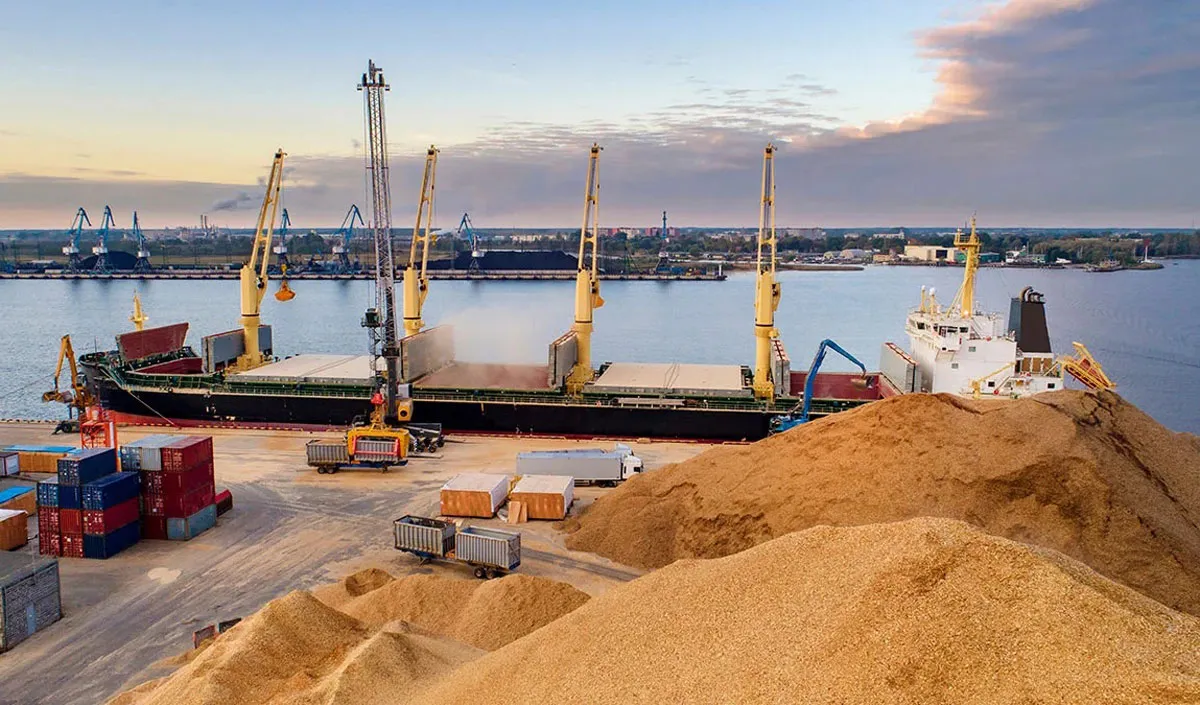
Approximately 11,000 grain wagons have accumulated in the direction of Odesa’s ports, creating a significant bottleneck in export logistics. The management of Ukrzaliznytsia has described the situation as approaching a critical threshold. According to the branch “Port Station Operator,” daily unloading volumes need to increase to 1,500 wagons in order to stabilize the flow, while the recent average stood at approximately 1,120 wagons per day, with loading reaching 1,170 wagons.
The congestion results from a combination of factors. These include a sharp increase in daily grain transportation volumes up to 100,000 tons (around 1,600 wagons), adverse weather conditions, repeated air raid alerts affecting port operations, and the impact of damage to the Odesa marshalling yard. Together, these elements have created a logistical bottleneck where the throughput capacity of port railway infrastructure does not match the intensity of incoming cargo flows.
The Odesa transport hub remains strategically vital for Ukraine’s agricultural exports, serving as a key maritime gateway. Despite earlier policy statements emphasizing diversification of export routes toward land and river corridors, maritime logistics continue to dominate and play a decisive role in securing foreign currency revenues. The current situation indicates that alternative routes have not yet fully compensated for the operational pressure on the ports of Greater Odesa.
Experts of the Institute of Danube Research underline that the present congestion reflects the need for a transition from reactive crisis management to a more balanced and integrated export logistics model. This includes stronger coordination between the railway operator, port administrations, and agricultural exporters, as well as more effective utilization of Danube ports as instruments for redistributing cargo flows and reducing peak pressure on the Odesa hub.
The accumulation of wagons therefore represents not merely a technical disruption but a structural indicator of systemic imbalances within Ukraine’s export logistics framework under wartime conditions. Developing an integrated, multimodal logistics model within the Danube–Black Sea region remains essential for enhancing the resilience of Ukrainian agricultural exports.

 Bulgaria
 Hungary
 Romania

 Moldova
 Serbia

 Danube