

Romania seeks to curb speculative renewable energy projects through a new guarantee scheme
 Romania
27.04.2026
Romania
27.04.2026
Romania’s energy regulator, ANRE, is preparing new rules for grid access for electricity generation and energy storage projects. The aim is to filter out speculative projects that block grid capacity but do not move toward actual construction, while giving priority to investors capable of delivering real renewable energy facilities.
The National Energy Regulatory Authority of Romania has published for public consultation a draft regulation amending the rules for grid connection. The core idea is to introduce stricter financial guarantees for developers seeking access to limited grid capacity. In particular, the proposal provides for a guarantee of EUR 20 per installed kilowatt to participate in future auctions for the allocation of available grid capacity, as well as a guarantee equal to 20% of the connection tariff after the technical connection solution has been approved by the grid operator.
The problem ANRE is addressing lies in the accumulation of a large number of projects that have received technical approvals or grid connection rights but are not actually progressing to construction. Such projects occupy scarce grid capacity, complicate network development planning and create barriers for genuine investors.
ANRE President George Niculescu directly linked the new requirements to the need to connect “real investors and real projects” to the grid, rather than projects that exist only “on paper”. According to Romanian media reports, the regulator has also drawn attention to cases where grid connection rights were effectively offered for sale on online platforms, which strengthened the case for a tougher financial filter.
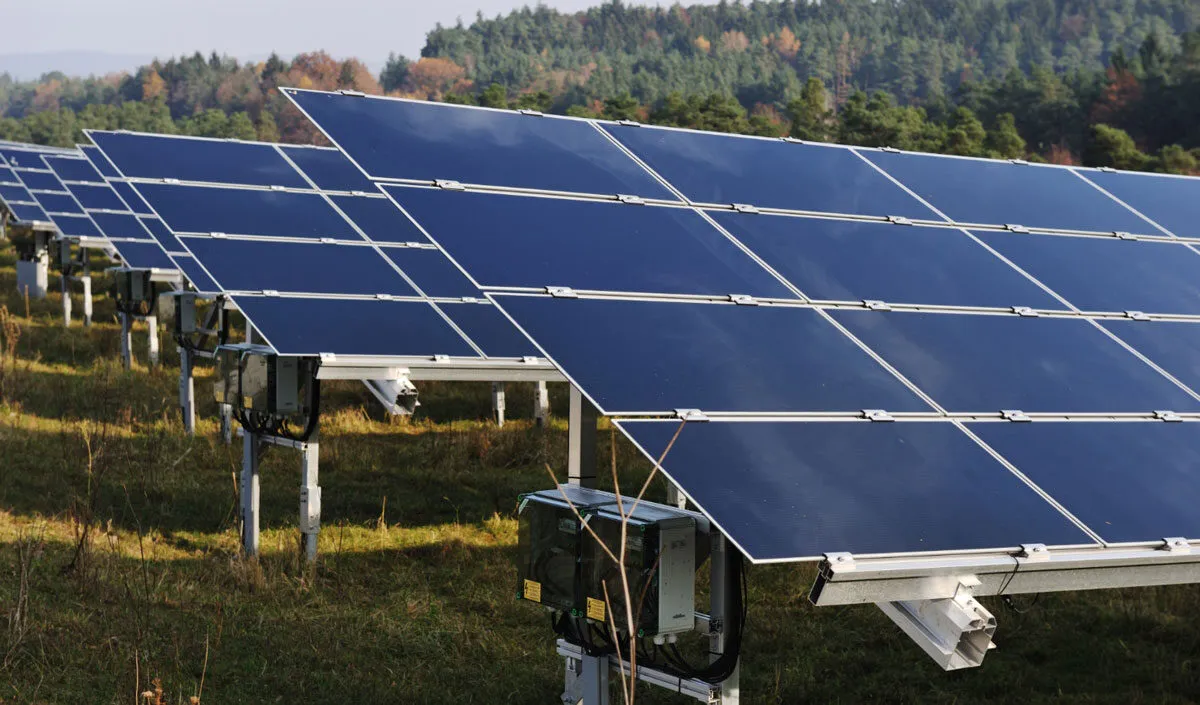
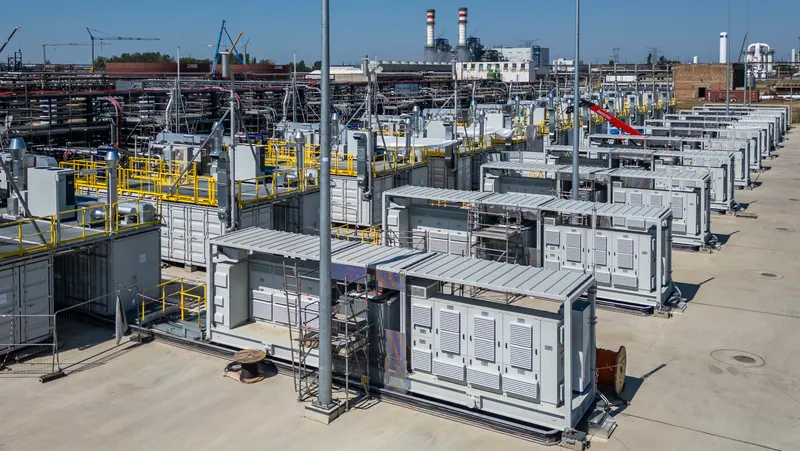
Romania is rapidly expanding its portfolio of solar, wind and energy storage projects. However, the development of generation is outpacing the capacity of grid infrastructure, making grid connection one of the main constraints of the energy transition.
In these circumstances, the right to connect to the grid becomes an economically valuable asset. If such rights are reserved not for construction but for the resale of projects, the market loses efficiency: investors with financing and mature technical solutions are forced either to wait, purchase projects from intermediaries or incur additional costs for grid reinforcement.
This issue had previously been raised by Romanian Prime Minister Ilie Bolojan, who pointed to the need to cancel permits that block or artificially increase the cost of access to the grid.
The proposed guarantee mechanism is intended to serve as a preliminary filter. If a developer genuinely intends to build a facility and has the financial capacity to implement the project, providing a guarantee becomes part of normal investment discipline. If, however, a project is created mainly to reserve grid capacity and then be resold, the financial barrier reduces the attractiveness of such a model.
At the same time, the government level demonstrates political support for this approach. Prime Minister Ilie Bolojan has stated that the authorities are identifying investors who received permits but have failed to move projects forward, which may indicate that they are waiting for resale rather than construction. According to Romanian media, the authorities have already compiled a list of such investors and are preparing further steps to clean the sector of speculative participants.
For Romania, this issue has not only a technical but also a strategic dimension. New renewable energy facilities are needed to stabilise electricity prices, meet EU climate objectives, strengthen energy security and reinforce the country’s regional role as a producer and transit country for electricity.
However, without disciplined access to the grid, the energy transition may face a paradox: a large number of declared “green” megawatts may never turn into actual generation. This is why ANRE’s new guarantees should be viewed as an attempt to move from the quantitative accumulation of applications to the qualitative selection of projects.
Comment by the Institute of Danube Research
For the Institute of Danube Research (IDR), Romania’s experience is an important example of how countries in the Danube–Black Sea region are gradually moving from policies aimed at stimulating renewable energy to policies focused on managing its quality, pace and infrastructural compatibility.
When grid capacity becomes a limited resource, the state must ensure that access is granted not to speculative applications, but to projects that genuinely increase generation, create jobs, strengthen energy security and correspond to strategic decarbonisation goals.
For Ukraine, this approach also has practical significance. In the process of post-war recovery and renewable energy development, especially in southern and border regions, grid connection, investor responsibility and prioritisation of real projects will be among the key issues. The Romanian model shows that the energy transition requires not only investment incentives, but also strict rules preventing critical infrastructure from being blocked by speculative participants.
Experts note:
“Romania’s initiative demonstrates an important stage in the development of the renewable energy market: after a period of rapid growth in applications, the state must move toward selecting real, financially capable and technologically prepared projects. For Ukraine, this is especially relevant, since the future recovery of the energy system should be based not on the formal number of declared megawatts, but on the ability of projects to be connected, financed and commissioned.
In the Danube–Black Sea region, energy infrastructure is increasingly becoming a factor of economic competitiveness. Therefore, access to the grid must be transparent, responsible and oriented toward real results, not toward the resale of rights or the artificial blocking of capacity.”
ANRE’s proposed guarantee scheme is an attempt to clear the market of speculative applications and direct limited grid capacity toward projects with a genuine prospect of implementation. For Romania, this is a tool for accelerating the energy transition; for the wider region, it is an important signal that the development of renewable energy requires not only ambitious targets, but also effective management of access to critical infrastructure.

 Bulgaria
 Hungary

 Ukraine
 Moldova
 Serbia

 Danube