

Danube Commission EM PERS
 Danube
06.02.2026
Danube
06.02.2026
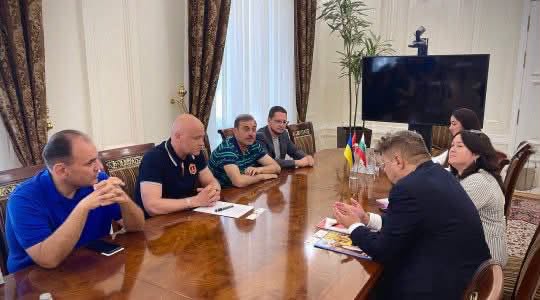
On 29 January 2026, the Danube Commission (DC) convened its Expert Meeting on Personnel Issues in Navigation on the Danube (EM PERS) to address the acute labour shortage and to review the state of implementation of EU legislation in the inland navigation sector. The meeting followed a joint DC–EDINNA workshop on 28 January and brought together more than 75 experts from Danube countries, including representatives of transport ministries and waterway administrations, the European Commission (DG MOVE), CESNI, ELA, the Transport Community, social partners, inland waterway operators, as well as training centres and educational institutions.
The discussions covered EU inland navigation personnel policy, transposition and enforcement of EU directives and regulations, education and training, digitalisation, and labour-market data. In the opening, the Director General of the DC Secretariat, Manfred Seitz, emphasised that people are the sector’s most important asset and that only well-trained personnel can successfully cope with digital transformation, the energy transition, and economic challenges.
A key focus was Directive (EU) 2017/2397 on the recognition of professional qualifications. Significant implementation gaps remain, as several EU Member States have not yet fully transposed the Directive. Among candidate countries in the Danube basin, Serbia and Ukraine are progressing toward recognition in line with EU legislation, while the Republic of Moldova has not yet submitted a request.
DG MOVE indicated that, at this stage, the Commission does not intend to introduce mandatory harmonised crewing requirements. Instead, CESNI standards are expected to be finalised by the end of 2026 and reflected in a non-binding Commission recommendation. At the same time, the use of digital tools—including the European Crew Database (ECDB) and electronic service record books and logbooks—is becoming mandatory. Experts stressed the need for improved coordination of enforcement, better access to systems such as the ECDB for control authorities, and increased investment in modern, harmonised, high-quality training.
Persistent challenges include an ageing workforce, shortages of skilled staff (notably ship masters), barriers to entry for newcomers, language barriers, and fragmentation of labour-market data.
Priorities for 2026 include continued cooperation with EDINNA, support for an ELA-commissioned study on labour mobility, and initiatives to harmonise vocational training and strengthen recruitment efforts supported by EU funding. The next EM PERS meeting is planned for January 2027.
Comment by the Institute of Danube Research
For Ukraine, where the Danube corridor performs a strategic resilience function in regional logistics, the personnel deficit is evolving into a systemic capacity constraint comparable to infrastructure bottlenecks. In this context, approximation to Directive (EU) 2017/2397 should be treated not merely as a formal element of EU approximation, but as an applied mechanism to reduce transactional barriers, expand professional mobility, and increase predictability for operators and control authorities.
At the same time, the transition to mandatory digital instruments (ECDB, electronic logbooks) requires institutional readiness: stable access regimes, clear data governance, staff training for both the industry and enforcement bodies, and interoperable procedures for verification. IDR considers it advisable in 2026 to prioritise: (1) a practical roadmap for recognition and documentation aligned with EU approaches; (2) a “digital personnel perimeter” (access, verification, responsibilities, cybersecurity hygiene); (3) modernised modular training with language components and simulator-based practice, focusing on critically scarce profiles (ship masters); and (4) labour-market analytics to synchronise training supply with real demand.

 Bulgaria
 Hungary
 Romania
 Ukraine
 Moldova
 Serbia