


EAERD opens free access to hydrological data on the Danube
 Bulgaria
06.04.2026
Bulgaria
06.04.2026
Bulgaria’s Executive Agency “Exploration and Maintenance of the Danube River” (EAEMDR) has opened an open data section on its official website, where average daily hydrological indicators for the Danube from a number of Bulgarian hydrometric stations have already been published. The data are available for reuse, provided that the source is properly cited and the agency’s established terms of use are respected.
The EAEMDR open data page contains datasets for 2020–2025 for the stations of Novo Selo, Lom, Oryahovo, Svishtov, Ruse, and Silistra. In addition, average daily water discharge (Q) data in m³/s for the Novo Selo station for the period 1940–2019 have also been published separately.
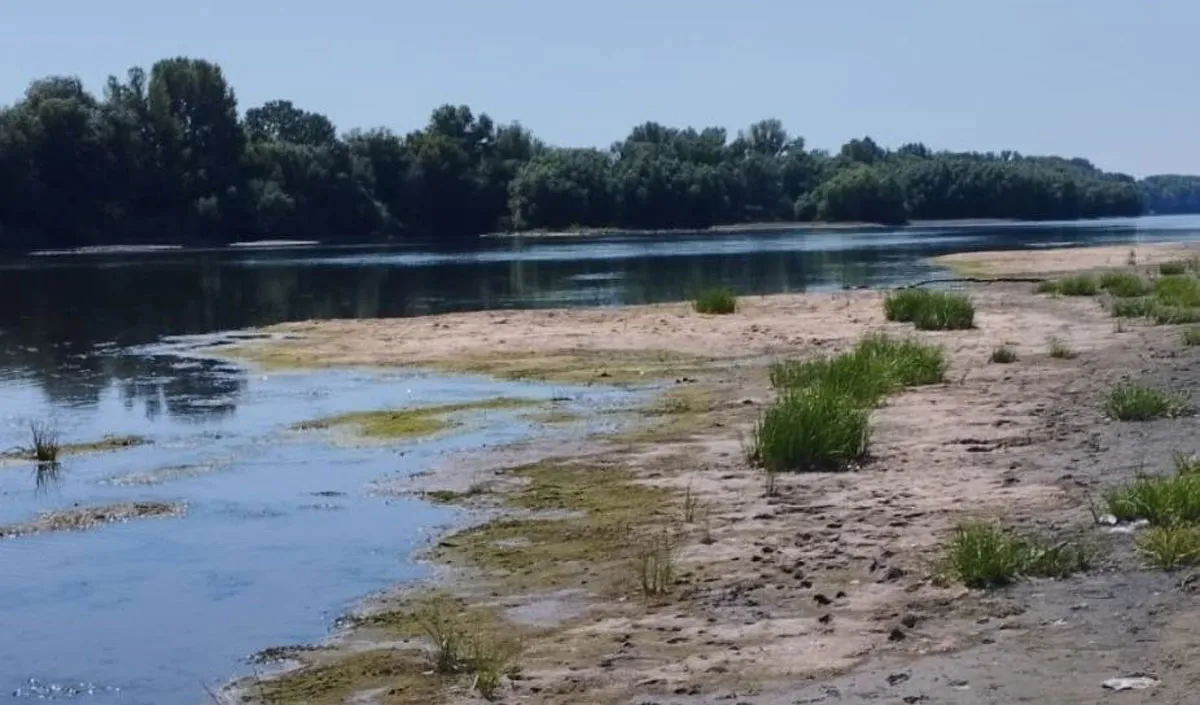
The information is of practical importance not only for navigation specialists, but also for researchers, analysts, environmental experts, and water management authorities. Under conditions of climate instability, when the Danube basin is increasingly facing periods of low water, extreme level fluctuations, and risks to navigation and ecosystems, open access to primary hydrological data becomes an important tool for analysis, modelling, and the preparation of management decisions. It also strengthens interagency coordination and improves the evidence base for climate adaptation. This is an interpretation of the significance of the published data based on their content and the nature of the EAEMDR publication.
Among the conditions for reuse, EAEMDR explicitly states the requirement for proper source citation, the prohibition of misleading representation of the data, the obligation to indicate any transformation of datasets, as well as references to European norms on access to environmental information, open data, and spatial information.
Comment by the Institute of Danube Research
The opening of systematic access to hydrological data on the Danube is a telling example of how river governance institutions can combine navigation, environmental, and scientific functions within a single digital logic.
For the entire Danube region, this development has significance that goes beyond the national level: open time series on water levels, discharge, and temperature create a foundation for more accurate forecasting, comparative basin-wide analysis, and better alignment of decisions in the areas of water security, navigation, and climate adaptation. In the long term, it is precisely such practices that shape a new standard of transparent transboundary governance of river systems.

 Ukraine
 Danube


 Moldova
 Romania



 Serbia
 Hungary


 Germany