

Field Ichthyological Research in the Lower Danube: Scientists Assess Fish Stocks and Rare Species
 Ukraine
14.04.2026
Ukraine
14.04.2026
Systematic scientific work aimed at studying aquatic biological resources is continuing in the Lower Danube, carrying importance both for environmental monitoring and for the development of evidence-based decisions in the field of nature management. Another stage of field research was conducted by specialists of the Institute of Marine Biology of the National Academy of Sciences of Ukraine, with a focus on key components of the region’s ichthyofauna.
During the expedition, researchers analyzed the size, sex, and age structure of the spawning segment of the Black Sea shad population migrating upstream to spawning grounds. Such studies make it possible to assess the condition of one of the species that is highly important for the Danube ecosystem and to trace the dynamics of its natural reproduction.
A separate area of work concerned the study of the Danube’s adjacent water bodies, floodplain lakes, and channels. These aquatic habitats form a complex mosaic of environments that directly influence fish species composition, feeding resources, and spawning conditions.
The scientists also assessed the condition of the river shrimp population, which since 2026 has become a commercial species subject to harvesting by fishers. In this context, the study of its abundance and size structure acquires practical significance, as it allows an assessment of existing stocks and helps determine environmentally acceptable parameters for resource use.
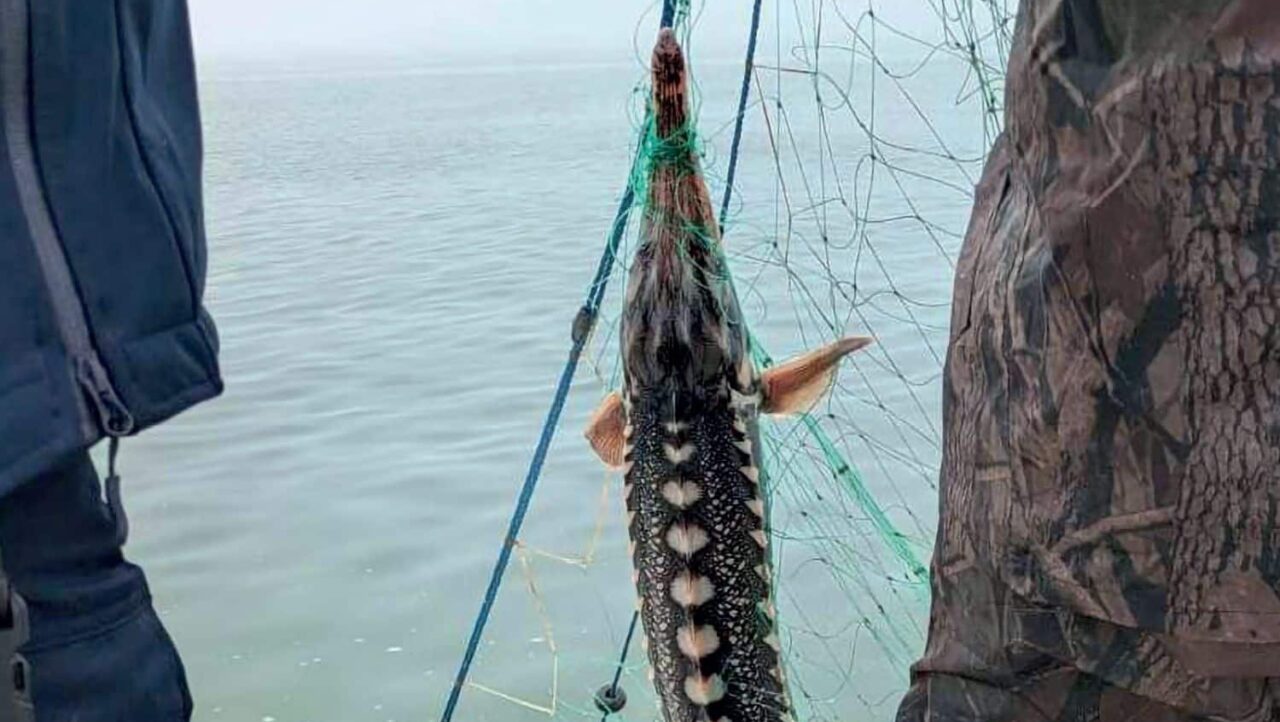
Particular attention was drawn to the recorded by-catch of stellate sturgeon, a species listed in the Red Book of Ukraine. Research concerning this species is being carried out under a separate permit issued by the National Commission on the Red Book of Ukraine and is aimed at studying the genetic structure of rare fish species in the region. This is an important step toward improving conservation approaches for sturgeon species in the Lower Danube.
The results obtained will serve as a basis for further assessment of the condition of aquatic biological resources, clarification of the ecological characteristics of individual aquatic habitats, and the development of more effective conservation measures in the region.
The researchers expressed sincere gratitude to the Danube Biosphere Reserve of the National Academy of Sciences of Ukraine and to its Director, Candidate of Biological Sciences Oleksandr Voloshkevych, for assistance in carrying out the research.
Comment by the Institute of Danube Research
The Lower Danube is one of the most valuable natural areas in Europe, where the interests of biodiversity conservation, fisheries, water management, and transboundary environmental security intersect. For this reason, field ichthyological research has not only academic but also strategic importance. It creates an evidence base for balanced management of aquatic biological resources, allows timely identification of risks to rare species, and supports the transition toward a more scientifically grounded conservation policy in the Ukrainian Danube region.

 Danube


 Bulgaria
 Moldova
 Romania



 Serbia
 Hungary

 Germany