

Renalfa and RGreen Invest Launch €800 Million Joint Venture for Renewable Energy Projects in Romania and Poland
 Romania
10.03.2026
Romania
10.03.2026
Austrian investment group Renalfa Solarpro Group, active in clean energy and electric mobility, and French infrastructure fund manager RGreen Invest have announced the creation of a new joint venture, Renalfa Power Clusters (RPC), which will finance the construction of hybrid renewable energy assets in Romania and Poland. The total value of the project portfolio is estimated at €800 million.
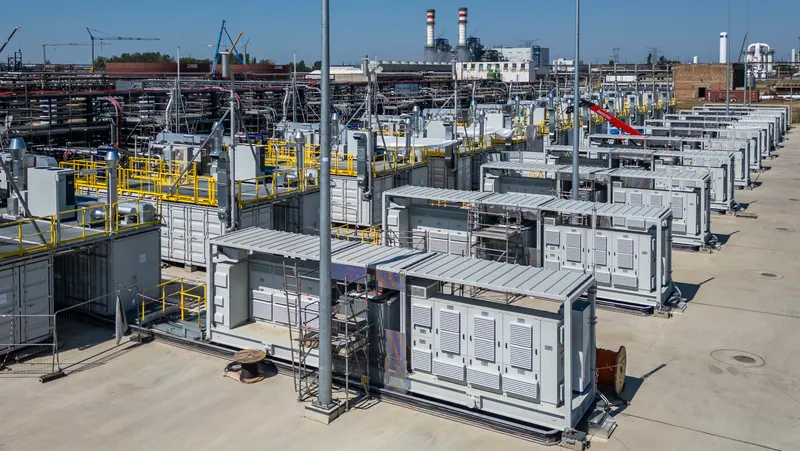
According to the joint press release, the partners will invest €200 million in equity into the new platform, which will focus on deploying next-generation solutions for the production, storage, and dispatch of renewable energy. A core technological component of the future energy clusters will be long-duration battery energy storage systems (BESS).
The companies note that the new venture builds on the scale and success of their first joint initiative, Renalfa IPP, which in less than five years has become one of Europe’s notable investors and operators of utility-scale hybrid renewable assets equipped with long-duration BESS. According to the partners, this model enabled Renalfa IPP to become one of the first companies in Europe to bring green baseload products to market.
Renalfa CEO Ivo Prokopiev stated that the company’s philosophy is not to avoid the risks associated with renewable energy, but to understand and manage them through new business models and advanced technologies.
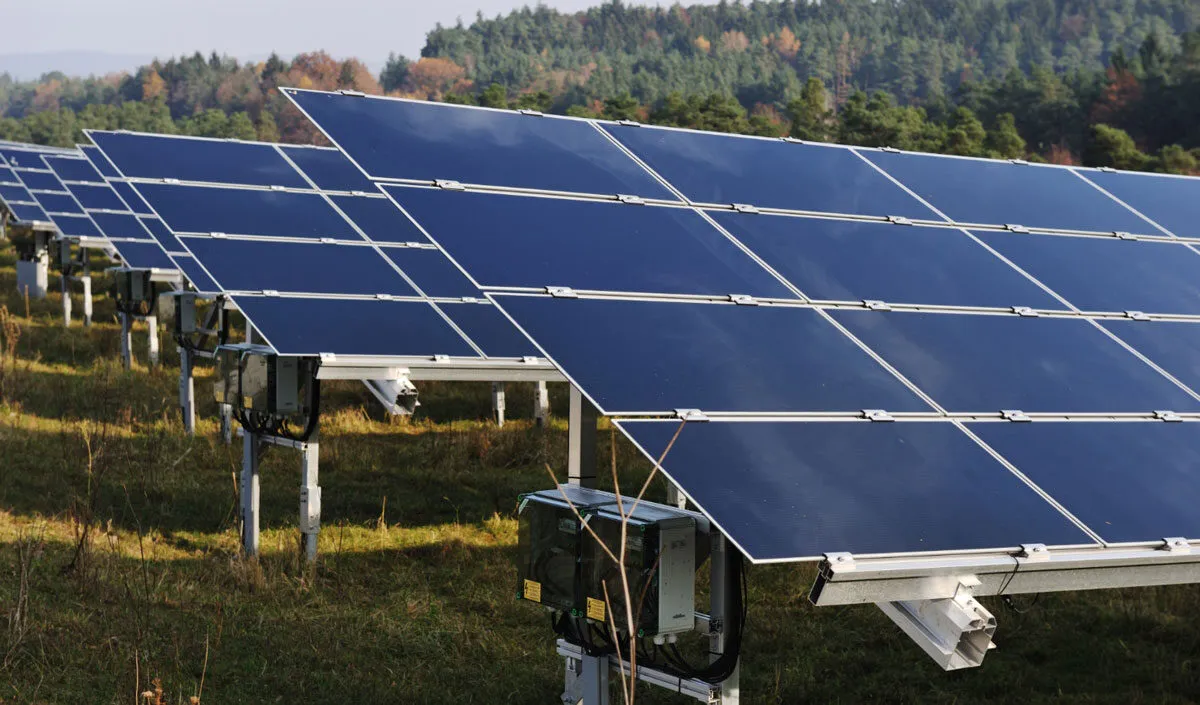
Through its subsidiaries, Renalfa Solarpro Group combines EPC capabilities, power generation, asset management, and energy trading. The group already has a significant presence in Bulgaria, Hungary, Romania, North Macedonia, and Poland. Its portfolio includes more than 753 MW of solar PV capacity, 89 MW of wind generation, and over 1.5 GWh of BESS in operation. In addition, the company has more than 2.3 GW of renewable energy projects and 9 GWh of storage capacity under construction and development.
For its part, RGreen Invest has supported more than 3,000 projects, mainly in Europe, with a total volume of managed investments exceeding €3.4 billion since its establishment.
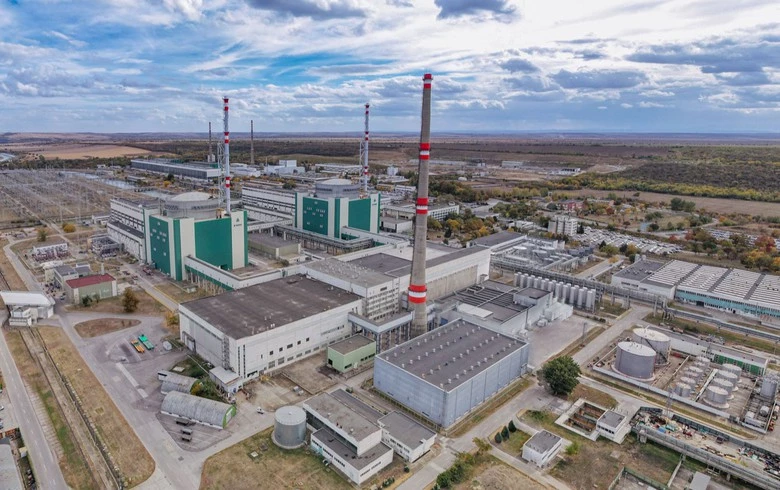
In Southeastern Europe, the partners are already involved in several projects, including the Tenevo Solar Technologies photovoltaic park in southern Bulgaria, the Kaolinovo solar park in northeastern Bulgaria, and a photovoltaic project in Romania’s Teleorman County. Last year, Renalfa IPP also secured €315 million in holding financing from a consortium of lenders led by the European Bank.
IDR Comment
The establishment of Renalfa Power Clusters is a telling example of how the energy transition in Central and Southeastern Europe is gradually moving from stand-alone generation projects to more complex integrated models, where the decisive factor is no longer only the production of green electricity, but also its storage, balancing, and adaptation to consumption profiles. In this sense, the development of hybrid energy clusters with long-duration BESS reflects a new phase of decarbonization in which the key value lies in the controllability of energy rather than only in installed capacity volumes.
Particular attention should be paid to the geography of the new joint venture — Romania and Poland. Both countries are playing an increasingly important role in the transformation of the energy market in the eastern part of the EU, combining strong demand, industrial potential, and political commitment to strengthening energy security. For Romania, this means reinforcing its position as a regional energy hub in the Black Sea–Danube area, while for Poland it represents a further acceleration of the shift away from a carbon-intensive development model.
In a broader regional context, such investments are also significant for Ukraine. They demonstrate that neighboring countries are building a new infrastructure of flexible and resilient energy systems that may in the future serve as a foundation for deeper market integration, the development of cross-border balancing, and a stronger role for storage systems in the region. For the countries of the Danube and Black Sea area, this is a signal that both competition and cooperation in the energy sector will increasingly be determined not only by access to generation capacity, but by the ability to integrate innovative storage solutions, digital management, and adaptive consumption.

 Bulgaria
 Hungary
 Ukraine
 Moldova
 Serbia
 Danube