

Renewables Covered 24.5% of Moldova’s Electricity Consumption in 2025
 Moldova
11.03.2026
Moldova
11.03.2026
In 2025, renewable energy sources covered 24.5% of the Republic of Moldova’s gross final electricity consumption. According to the National Center for Sustainable Energy, the increase in the share of renewable electricity was driven by both the growing number of renewable electricity producers and the rapid expansion of installed capacity nationwide.
By the end of 2025, Moldova’s total installed renewable energy capacity had exceeded 980 MW, compared with about 77 MW in 2020. This means the sector expanded 12.7 times over five years. In 2025 alone, more than 400 MW of new capacity was installed, accounting for over 40% of total existing renewable capacity and making the year a record one for the country’s energy transition.
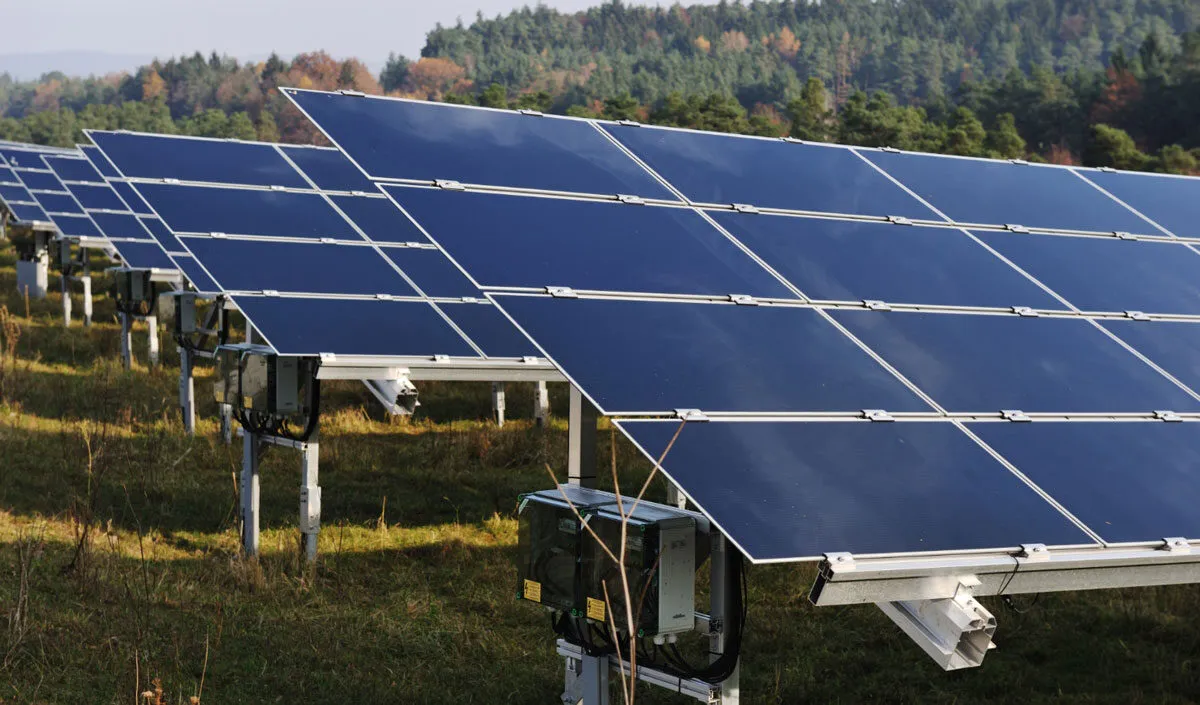
Solar energy remained the dominant technology, reaching 710.56 MW, or 72% of total installed renewable capacity. Wind energy accounted for 246.52 MW, or 25%, while hydropower and biogas represented 16.75 MW and 7.16 MW respectively.
State support mechanisms also played an important role in this growth. By the end of 2025, Moldova had 8,713 prosumers, including 5,051 beneficiaries under net metering and 3,662 under net billing. These mechanisms contributed to the installation of 195.27 MW, or 20% of total installed renewable capacity. Overall, state support schemes facilitated the deployment of 442.40 MW, equivalent to 45% of total installed renewable capacity. At the same time, 538.58 MW, or 55%, was installed on the free market, underlining the increasing economic viability of renewable electricity generation for both domestic and international investors.
The year 2025 also marked the launch of Moldova’s first tenders for the construction of wind and photovoltaic power plants, including projects with energy storage components. These initiatives are intended to help achieve the targets of the National Integrated Energy and Climate Plan 2025–2030: at least 27% renewable energy in gross final energy consumption and at least 31.2% renewable electricity in gross final electricity consumption.
IDR Comment.
The 24.5% indicator should be seen not only as a decarbonisation milestone, but also as evidence of Moldova’s gradual strengthening of energy resilience. The rapid scale-up of solar and wind generation reduces vulnerability to external energy shocks, diversifies supply sources, and supports a more flexible and secure power system. In the broader Lower Danube and Black Sea context, this trend is strategically important because energy security is increasingly becoming part of the region’s wider economic and geopolitical stability architecture. This assessment is grounded in the officially reported growth in installed capacity, the expanding number of market participants, and the launch of competitive support mechanisms.
From an analytical perspective, Moldova’s case demonstrates a transition from selective support for renewables to the emergence of a more mature and investment-attractive green energy market. For Ukraine and other neighbouring states, this experience is particularly relevant in the context of post-war energy system modernisation, distributed generation development, and the strengthening of cross-border energy resilience.

 Bulgaria
 Hungary
 Romania
 Ukraine
 Serbia
 Danube