


Romania to tighten oversight of ballast pit operations
 Romania
07.04.2026
Romania
07.04.2026
Romanian authorities are preparing stricter controls and legislative changes targeting the extraction of mineral aggregates from riverbeds, Prime Minister Ilie Bolojan has said amid growing concern over widespread abuses in the sector. The planned measures are intended to curb malpractice and improve the protection of natural resources through stronger inspections and tighter rules governing permits and operations.
The initiative follows an official review indicating systemic abuse of permits, as numerous projects formally registered as fish ponds were allegedly used in practice for the extraction of sand and gravel. According to Romania’s Ministry of Environment, over the past decade more than 1,200 water management permits were issued for projects declared as fish ponds, yet less than 10% were actually completed for their stated purpose.
Environment Minister Diana Buzoianu has pledged tougher inspections, warning that the current regulatory framework contains major loopholes. The ministry’s analysis suggests that many of these projects functioned as cover for long-term aggregate extraction, often leaving behind degraded sites and significant costs for local communities.
Media investigations have also intensified public attention around the issue. Romanian reports said that more than 600 permits linked to fish pond developments were being reviewed for the 2023–2025 period alone, amid suspicions that some operations served as fronts for illegal ballast pits. Some reports further alleged that certain illegal sites may have benefited from political protection.
Authorities say that coordinated intervention is necessary to address the scale of the problem and restore compliance in the sector. The government is now signaling a shift from fragmented control to a more systematic enforcement approach aimed at closing the gap between environmental permitting and actual field operations.
Comment by the Institute of Danube Research
Romania’s move to strengthen oversight of ballast pits carries significance far beyond a purely environmental agenda. For the Danube–Black Sea region, the issue is directly linked to river ecosystem governance, water resource security, floodplain resilience, and the overall credibility of state control over strategic natural assets. Schemes in which fish-farm or similar permits are used as a legal cover for de facto industrial extraction create a double risk: they undermine ecological balance while also distorting the market for construction aggregates. For Ukraine, this case is particularly instructive, showing that in periods of high infrastructure demand the state must establish transparent extraction, monitoring, and reclamation mechanisms in advance, so that temporary permits do not evolve into tools of systemic river landscape depletion.

 Ukraine
 Danube


 Bulgaria
 Moldova




 Serbia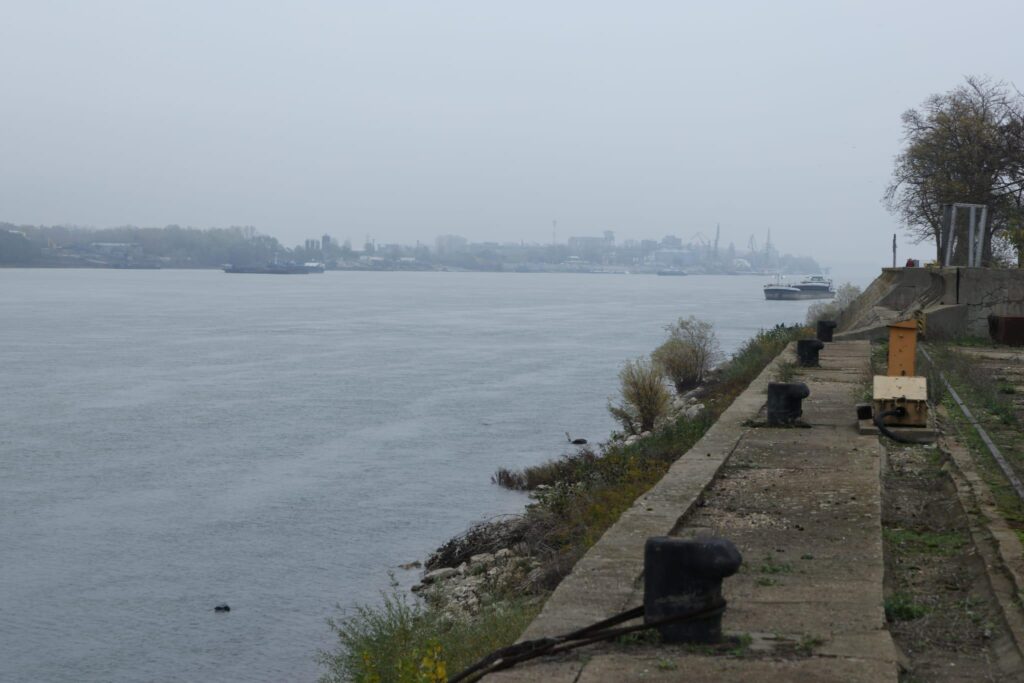
 Hungary


 Germany