

Bulgaria, Romania and Greece advance new Danube infrastructure: three bridges and upgraded ferry connections
 Bulgaria
05.12.2025
Bulgaria
05.12.2025
Bulgaria, Romania and Greece have signed a Memorandum of Understanding aimed at strengthening cross-border cooperation and developing strategic transport infrastructure in South-East Europe. The agreement includes the construction of three new Danube bridges and the modernisation of several key ferry links.
Planned bridge projects
According to the Bulgarian Ministry of Transport, the participating countries intend to build:
- a second combined road–rail bridge Ruse–Giurgiu,
- the Silistra–Călărași bridge,
- the Nikopol–Turnu Măgurele bridge.
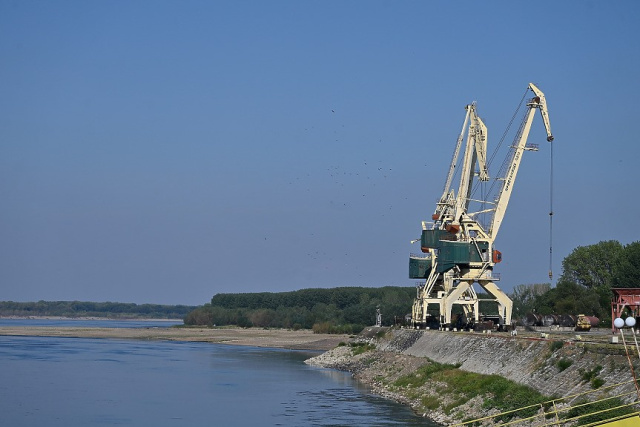
In parallel, the Danube ferry lines Oryahovo–Bechet, Svishtov–Zimnicea, and Silistra–Călărași will be upgraded to dual-use standards, enhancing their capacity and meeting EU military mobility requirements.
Bulgarian Minister of Transport Grozdan Karadzhov stated that “new bridges — not just one, but several — are a key element of Europe’s future. These are not bilateral projects but part of the European infrastructure that strengthens the Single Market, ensures military mobility, and makes the North–South axis fully functional.”
IDR Commentary
A significant boost for macro-regional integration and transport resilience in the Lower Danube
The signing of the memorandum by Bulgaria, Romania and Greece marks an important strategic development for the entire Danube Region, including Ukraine, which is actively integrating into the TEN-T network and the EU Strategy for the Danube Region (EUSDR).
The construction of three additional bridges reduces dependence on the limited number of existing crossings, helping to overcome long-standing logistical bottlenecks along one of Europe’s most important transport axes.
The modernisation of ferry links and new bridges in Romania and Bulgaria complement the growing logistical role of Ukraine’s Danube ports — Izmail, Reni, Ust-Dunaisk.
For Ukraine, this means:
- reduced export and transit costs,
- increased land-route capacity to EU ports,
- deeper integration into the European transport space.
The North–South axis becomes a critical driver of economic and security resilience
Dual-use infrastructure aligns with EU priorities on military mobility, strengthening security cooperation and regional stability around the Black Sea and the Balkans.
Romania’s role as a continental transport hub continues to grow. The planned bridges reinforce Romania’s position in the emerging North–South corridor linking the Baltic, Black and Aegean Seas — a development that also opens new opportunities for Ukraine’s economic and logistic partnerships.
The initiative of Bulgaria, Romania and Greece represents a forward-looking step toward building a modern, resilient and efficient transport architecture for the Danube Region. For Ukraine, it brings new opportunities for improved connectivity, strengthened logistics in the Lower Danube, and closer integration with EU transport systems.


 Hungary
 Romania
 Ukraine
 Moldova
 Serbia

 Danube