

Croatia completes construction of the €80 million Zabok — Lučko gas pipeline
 Croatia
16.06.2026
Croatia
16.06.2026
Croatian gas transmission system operator Plinacro has completed construction of the Zabok — Lučko gas pipeline, a project worth €80 million. The project is part of a broader programme to modernise the national gas transmission infrastructure and expand the possibilities for using the capacity of the LNG terminal on the island of Krk.
The new gas pipeline was financed under the European Union’s Recovery and Resilience Facility. According to Plinacro, its commissioning increases the flexibility of transport capacity management, strengthens gas supply security and creates conditions for a significant increase in natural gas transportation towards Slovenia.
The Zabok — Lučko gas pipeline is 36 km long. Its route partially passes under the Sava and Krapina rivers, railway infrastructure and a motorway. Almost the entire route was laid within the existing corridor of main gas pipelines, which made it possible to minimise the project’s environmental impact.
Together with the already completed 58-kilometre Zlobin — Bosiljevo gas pipeline, the new pipeline forms part of Plinacro’s investment plan. The programme also includes the construction of two additional main gas pipelines: the 101-kilometre Bosiljevo — Sisak pipeline and the 21-kilometre Sisak — Kozarac pipeline.
The Croatian government allocated a €533 million grant to Plinacro under the national recovery and resilience plan. These funds are intended to develop gas transmission infrastructure and increase national gas transport capacity.
Once all projects are completed, Croatia will be able to use the capacities of the Krk LNG terminal much more efficiently. The terminal began operations in January 2021 and supplies natural gas to Croatia’s national transmission network, which is connected to the gas systems of other EU member states, including Slovenia and Hungary.
Gas transport capacity towards Slovenia is expected to increase to 1.5 billion cubic metres per year, while capacity towards Hungary is expected to reach 3.5 billion cubic metres per year, depending on exit pressure.
Comment by the Institute of Danube Research
According to experts of the Institute of Danube Research, the completion of the Zabok — Lučko gas pipeline is an important element in strengthening the energy resilience of Central and South-Eastern Europe. The project demonstrates that, after the energy crisis and the reassessment of dependence on Russian energy resources, countries in the region are moving from situational response to systematic infrastructure modernisation.
The IDR also notes that infrastructure projects of this kind strengthen not only the region’s energy connectivity, but also its political interconnectedness. The Croatian example shows that LNG terminals, gas pipelines and cross-border connections are becoming components of a broader system of regional resilience, which is important for the security, economy and European integration of South-Eastern European countries.

 Bulgaria
 Hungary
 Romania
 Ukraine
 Moldova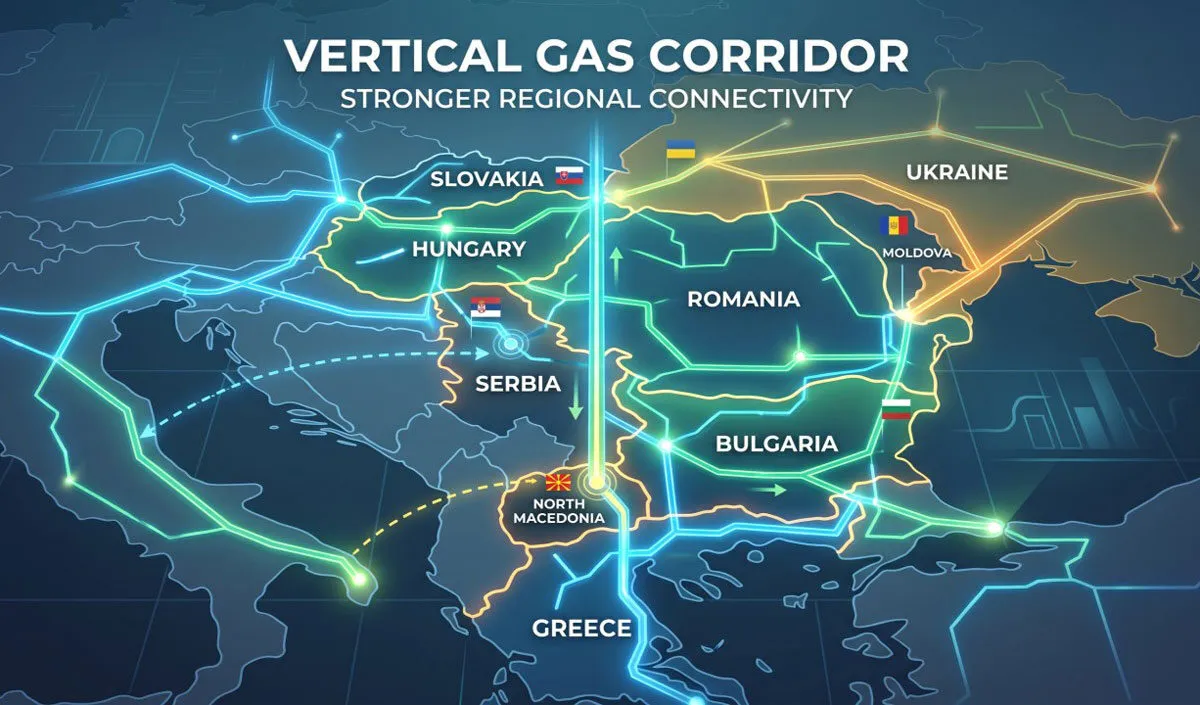
 Serbia

 Danube