

Danube – Black Sea – Caspian: Shaping a New Eurasian Logistics Axis
 Ukraine
19.12.2025
Ukraine
19.12.2025
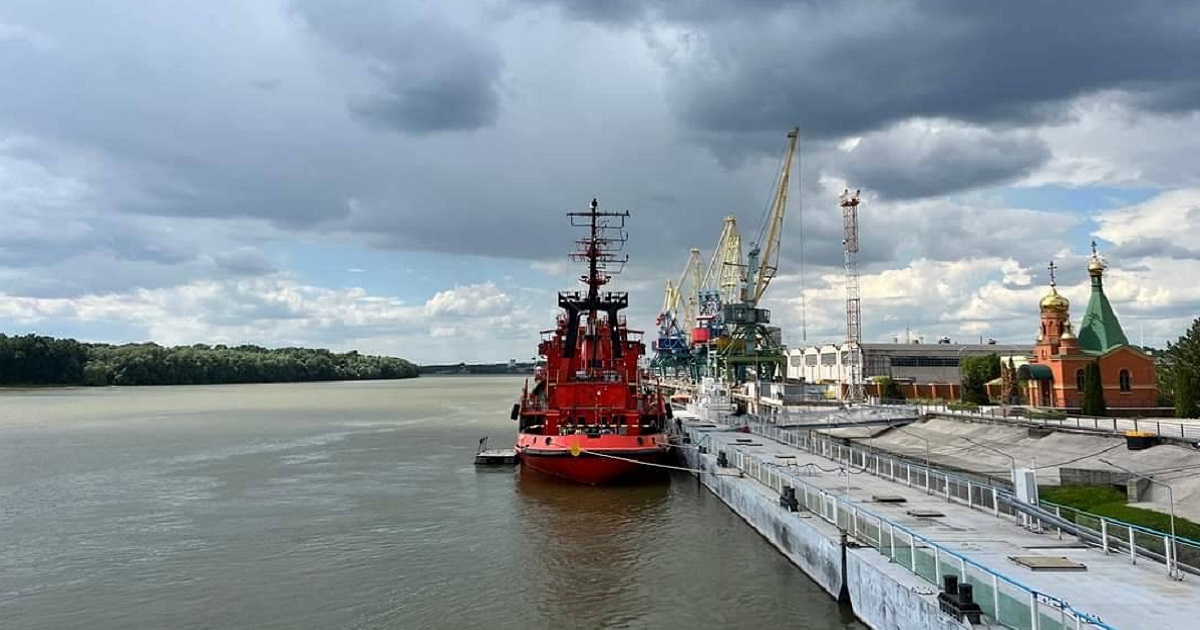
In December 2025, the management of Bilhorod-Dnistrovskyi Sea Port (Ukraine) took part in the international conference Caspian Ports and Logistics 2025, held on 9–11 December in Aktau, Republic of Kazakhstan. The event brought together key stakeholders from the port, transport and logistics sectors across the Caspian region and the wider Eurasian space.
The conference took place in one of the strategic hubs of the Middle Corridor (Trans-Caspian International Transport Route) and served as a high-level platform for discussing multimodal connectivity, port and railway infrastructure development, and investment opportunities in emerging Eurasian transport corridors.
The event gathered port authorities, port engineers, major cargo owners, railway operators, logistics providers and terminal companies from the Caspian basin, Central Asia, the South Caucasus and Europe.
Comment by the Institute of Danube Research
The Institute of Danube Research views the participation of Bilhorod-Dnistrovskyi Port in Caspian Ports and Logistics 2025 as a practical step towards shaping the strategic “Danube – Black Sea – Caspian” axis.
In the context of the ongoing war, global supply chain reconfiguration and the search for resilient transport routes, this axis is gaining strategic importance for Ukraine as an alternative and secure pathway for integration into Eurasian and European logistics networks.
Ukrainian Danube and Black Sea ports have the potential to act as the western European gateway of the Middle Corridor, complementing Caspian and Central Asian transport routes. In this framework, Bilhorod-Dnistrovskyi Port can become an important element of future short sea shipping, river–sea transport and multimodal logistics systems.
The IDR emphasizes that strengthening cooperation between Danube, Black Sea and Caspian ports is a key prerequisite for:
- reducing dependency on traditional transit routes;
- increasing the resilience of regional transport systems;
- integrating Ukraine into the emerging post-war Eurasian logistics architecture.

 Bulgaria
 Romania

 Moldova




 Serbia




 Danube