

Danube Ports Throughput to Reach 15 Million Tonnes: IDR Commentary
 Ukraine
05.01.2026
Ukraine
05.01.2026
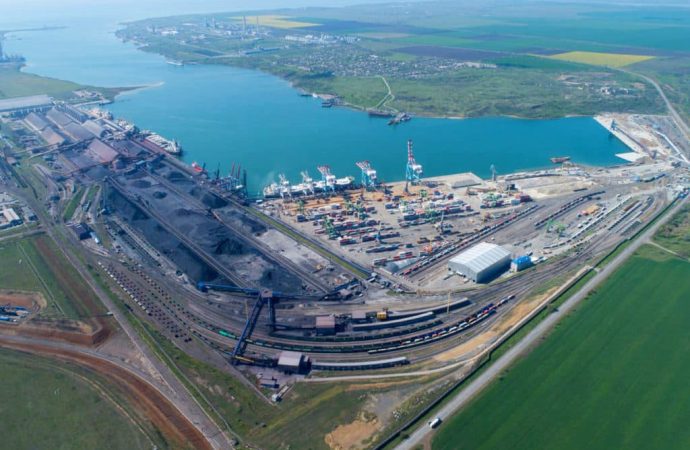
In 2026, the Ministry for Communities and Territories Development of Ukraine plans to implement a set of measures aimed at modernising maritime and river transport and strengthening the country’s logistical resilience. A key target is to increase the annual cargo throughput of Danube ports to at least 15 million tonnes.
Despite persistent military threats, in 2025 (over 11 months) ports of Odesa region handled nearly 68 million tonnes of cargo, more than 8 million tonnes of which were processed by Danube ports. A stabilising role has been played by the Ukrainian Maritime Corridor, established after the Russian Federation withdrew from the Black Sea Grain Initiative in July 2023. Since then, over 160 million tonnes of cargo have been transported by more than 6,000 vessels, including more than 96 million tonnes of Ukrainian agricultural products.
Planned measures for the development of Danube ports include:
- establishment of a unified administration for the Danube port cluster and corporatisation of state-owned stevedoring companies;
- large-scale automation of port operations and development of the River Information Services (RIS);
- enhancement of multimodal connections between maritime and Danube ports.
The implementation of these measures is expected to optimise administrative costs by UAH 22 million, preserve over 2,000 jobs, and ensure the stable operation of Ukrainian Danube Shipping Company routes towards EU ports. Key operational hubs in this process include the ports of Izmail, Reni, and Ust-Danube.
Commentary of Institute of Danube Research
The Institute of Danube Research (IDR) notes that increasing the throughput of Danube ports to 15 million tonnes has strategic importance for both regional and national resilience. This objective should be understood not merely as quantitative growth, but as a qualitative transformation of Danube ports into an integrated logistics cluster aligned with EU transport corridors.
According to IDR, the success of this policy will depend on three critical factors: institutional coherence in port governance, alignment of digital and RIS solutions with EU standards, and the development of multimodal logistics enabling the Danube to assume a system-forming role in Ukraine’s post-war logistics architecture.

 Bulgaria
 Hungary
 Romania

 Moldova
 Serbia


 Danube