

GWP Hungary strengthens dialogue on water resources management and youth engagement
 Hungary
28.01.2026
Hungary
28.01.2026
Between December 2025 and January 2026, GWP Hungary actively contributed to national and international water governance processes, placing a strong emphasis on youth engagement and regional cooperation within the Danube River Basin. These activities reflect a comprehensive approach to Integrated Water Resources Management (IWRM), combining policy dialogue, scientific expertise, and participatory mechanisms.
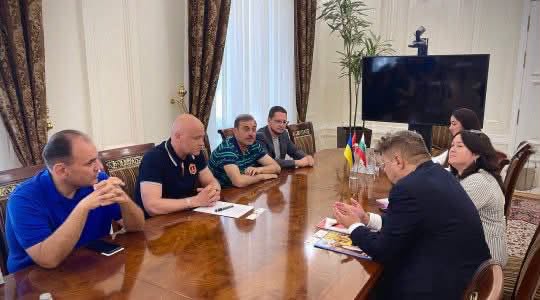
In December, GWP Hungary participated in a meeting of the National Water Management Council organised by the Hungarian Ministry of Energy. Represented by Gyula Reich, the Partnership ensured that expert perspectives were incorporated into high-level discussions on national water management priorities, including climate adaptation and cross-sectoral coordination.
GWP Hungary also took part in the National Hearings on the EU Strategy for the Danube Region (EUSDR) in Budapest. The event highlighted water quality protection and presented the results of the 5th Joint Danube Survey. During a dedicated roundtable on citizen science, Mónika Jetczin shared GWP Hungary’s youth-oriented experience, showcasing international initiatives that support youth participation in water monitoring and decision-making processes.
In January 2026, GWP Hungary and its partners joined a preparatory meeting of the Youth for Water and Climate programme in Strasbourg. Discussions focused on project progress and upcoming mobility activities, including planned events in Budapest aimed at further strengthening cross-border youth cooperation.
IDR Analytical Comment
From the perspective of the Institute of Danube Research, GWP Hungary’s recent activities illustrate an advanced model of inclusive water governance that integrates policy dialogue, scientific evidence, and youth participation. Such an approach is particularly relevant for the Danube Basin countries, including Ukraine, where long-term water security and climate resilience require institutional coordination and the systematic involvement of younger generations in governance processes.

 Bulgaria
 Romania
 Ukraine
 Moldova
 Serbia
 Danube