

Moldova, Ukraine, Romania and Bulgaria Form a New Cross-Border Territorial Cooperation Group
 Ukraine
18.11.2025
Ukraine
18.11.2025
A new European Grouping of Territorial Cooperation (EGTC) is being established by Moldova, Ukraine, Romania and Bulgaria, creating an unprecedented framework for cross-border development and direct access to EU regional funds.
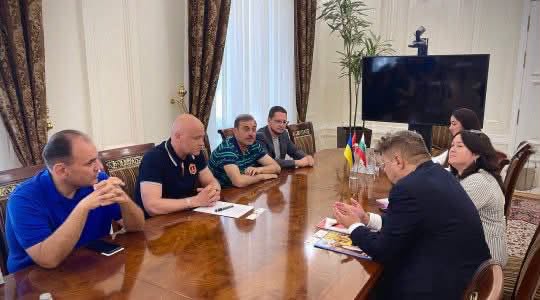
A working session dedicated to the creation of the grouping took place on 18 November under the auspices of the Moldovan Parliamentary Committee for Public Administration and Regional Development. Representatives of public authorities from all four states took part in the discussions.
Sergiu Sucărenco, head of the Committee for Creating the EGTC, announced that the General Assembly, as the decision-making body, will approve both the Statute and the official name of the new structure. Two options are currently under consideration:
- EST Gate (“Eastern Gate”)
- Eastern Corridor
The establishment process requires coordination with local and regional governments in all four countries and formal approval by national governments.
The General Assembly is scheduled for early 2026. The legal seat of the EGTC will be located in Scobinți commune, Iași County, Romania, in line with EU rules requiring that headquarters be placed within an EU Member State when third countries — in this case, Ukraine and Moldova — participate.
According to Sucărenco, this will be “the largest and only EGTC of its kind east of the EU”, marking an important step for the European integration of Ukraine and Moldova and strengthening territorial cooperation with Romania and Bulgaria.
The grouping will include public authorities, institutions and civil society organisations from all four countries.
An EGTC is a legal entity recognised across the EU and can directly access the European Regional Development Fund (ERDF) and other EU instruments.
IDR Commentary
The creation of a four-country EGTC involving Moldova, Ukraine, Romania and Bulgaria is a historic development for the Black Sea–Danube region. It offers a structural mechanism for long-term cooperation, shared development planning and direct participation in EU-funded programmes.
For the two non-EU countries, participation in an EGTC is a bridge into the institutional and financial architecture of the EU. It enhances local governance capacity, supports European integration processes and opens access to ERDF with fewer bureaucratic obstacles.
The proposed names — Eastern Corridor or EST Gate — highlight the ambition to create a transnational corridor of mobility, logistics, innovation and cooperation along the Prut–Danube axis and the Black Sea neighbourhood.
An EGTC relies on the principle of subsidiarity: decisions and project implementation are decentralised and placed directly in the hands of local and regional authorities.
For communities in the Danube basin, this means stronger autonomy and a greater ability to participate in EU-funded initiatives without intermediaries.
Romania and Bulgaria contribute EU membership, stability and institutional frameworks, while Ukraine and Moldova add geographic connectivity, reform-driven dynamics and strategic relevance.
This synergy forms the basis for the most significant territorial cooperation platform in Eastern Europe.
For Ukraine’s Danube region — including Reni, Izmail, Bolhrad, Kilia and neighbouring communities — participation in the EGTC can unlock major opportunities in:
- cross-border infrastructure
- transport and logistics
- environmental and river-basin management
- tourism and cultural heritage
- economic and social development
The Institute of Danube Research emphasises the need for active engagement of Ukrainian Danube municipalities to ensure meaningful participation and strategic positioning within the new EGTC.

 Bulgaria
 Hungary
 Romania
 Moldova
 Serbia
 Danube