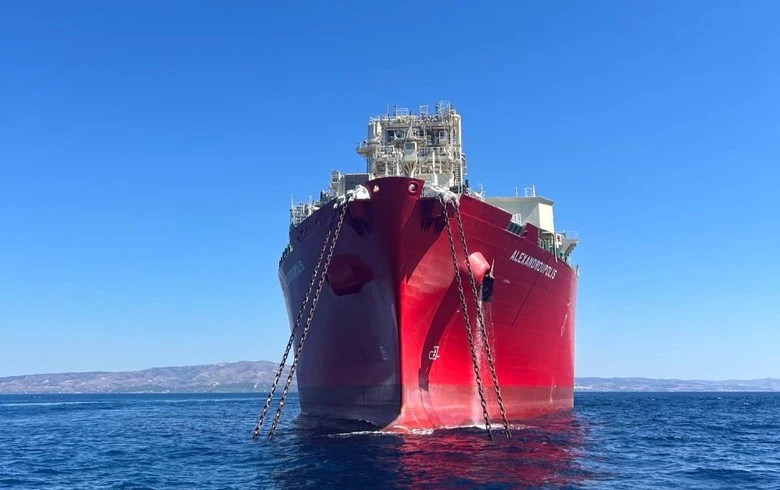


Reni City Council Requests Cancellation of Double Port Fees for Vessels Heading to Reni
 Ukraine
02.12.2025
Ukraine
02.12.2025
Members of the Reni City Council have appealed to the Head of Odesa Regional Administration, Oleh Kiper, as well as to the leadership of the Izmail District Military Administration and District Council, requesting the cancellation of double port fees charged for vessels transiting the water area of the Port of Izmail on their way to Reni.
According to “Reni–Odesa”, amendments to the Cabinet of Ministers’ resolutions of 11 November 2022 regarding the delineation of port water areas have put the Reni branch of the Ukrainian Sea Ports Authority (USPA) at a competitive disadvantage. Shipowners must pay the vessel fee twice when their ships transit Izmail’s water area en route to the Port of Reni, making Reni less economically attractive.
Additional factors increasing the cost of calling at Reni include:
- the mandatory presence of the emergency-rescue vessel Smilyvyi during operations with dangerous goods — which generates extra expenses covered by port dues;
- the absence of such mandatory standby service in Izmail;
- the lack of direct railway access to the Port of Reni (the rail line runs through Moldova), increasing delivery costs;
- the total difference in expenses between calling at Reni and Izmail can reach up to USD 10,000 per vessel.
City Council members therefore ask USPA to cancel the double vessel fee and to oblige the Port of Izmail to maintain its own emergency-rescue vessel on equal terms.
IDR Comment
The Institute of Danube Research notes that the double port fee situation is a clear example of regulatory asymmetry within Ukraine’s Lower Danube port cluster. This asymmetry creates unequal competitive conditions between ports and undermines the development of an integrated regional logistics system.
Key analytical observations:
- The Port of Reni plays an important role in wartime logistics and humanitarian corridors, yet its competitiveness is constrained by regulatory and infrastructural barriers.
- The double vessel fee significantly decreases Reni’s attractiveness and diverts cargo flows towards Izmail or foreign ports.
- Unequal requirements for emergency-rescue standby create additional disparities in operational costs.
- In the context of developing a Danube logistics cluster and harmonising corridors with Romania and Moldova, unified and balanced port regulations are essential.
The IDR emphasizes the need for coordinated port governance in the Ukrainian Danube region — taking into account shared water areas, transit routes, and the broader agglomeration potential of the Lower Danube.

 Danube


 Bulgaria
 Moldova
 Romania

 Serbia
 Hungary
 Germany