

Romania Moves Closer to Final Investment Decision on the Doicești SMR Power Plant
 Romania
26.01.2026
Romania
26.01.2026
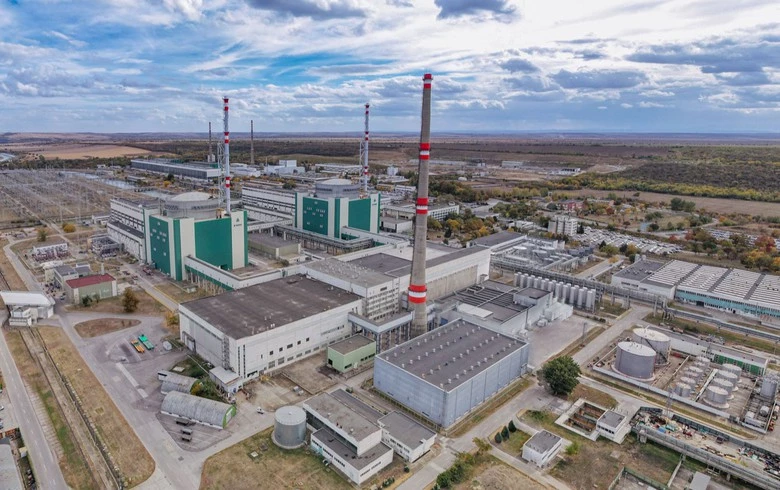
Romania’s Ministry of Energy has initiated the procedure for adopting the Final Investment Decision (FID) on the Small Modular Reactor (SMR) nuclear power plant project in Doicești, Dâmbovița County. A formal request has been submitted to the shareholders of the state-owned company Nuclearelectrica, whose shares are listed on the Bucharest Stock Exchange.
The shareholder vote on the FID for the 462 MW NuScale-based SMR project is scheduled for 12–13 February. The meeting agenda also includes approval of the binding conditions of the feasibility study, mechanisms for financing the pre-construction phase, procurement and construction arrangements, as well as amendments to existing loan and mortgage agreements with the project company RoPower Nuclear.
The Doicești SMR project envisages the installation of six reactor modules of 77 MW each. It is being implemented by RoPower Nuclear, jointly owned by Nuclearelectrica and Nova Power & Gas. The facility is designed to complement renewable energy sources, provide system balancing, support the reindustrialisation of decommissioned power generation sites, and stimulate regional development through an advanced supply chain.
The project has already secured international financial backing. In October 2024, the Export-Import Bank of the United States approved USD 99 million in financing for RoPower Nuclear. This support forms part of a broader multinational commitment announced at the G7 Leaders’ Summit in Hiroshima, which includes up to USD 275 million for project development and significantly larger potential financing volumes for the construction phase.
IDR Commentary
Experts of the Institute of Danube Research assess the Doicești SMR project as a structurally important element in shaping a new energy resilience architecture in the Lower Danube region. Beyond Romania’s national energy strategy, the project contributes to the creation of an additional stabilising generation hub in South-Eastern Europe, capable of mitigating volatility linked to the growing share of renewable energy and increasing peak demand.
For Ukraine, particularly for Odesa region, the proximity of such a high-capacity and flexible nuclear facility in the Danube macro-region has indirect but strategic relevance. Strengthening Romania’s generation base and its integration into the European energy market enhances the reliability of cross-border energy interconnections, reduces systemic regional risks, and creates additional options for emergency balancing under conditions of continued military threats to Ukraine’s energy infrastructure.
IDR experts also note that the Doicești SMR project may become a nucleus for the development of a regional nuclear and advanced energy technology value chain in the Danube area. In the medium term, this opens opportunities for cooperation, knowledge transfer, and the gradual inclusion of Ukraine in European processes related to next-generation nuclear and low-carbon energy solutions.

 Bulgaria
 Hungary

 Ukraine
 Moldova
 Serbia

 Danube