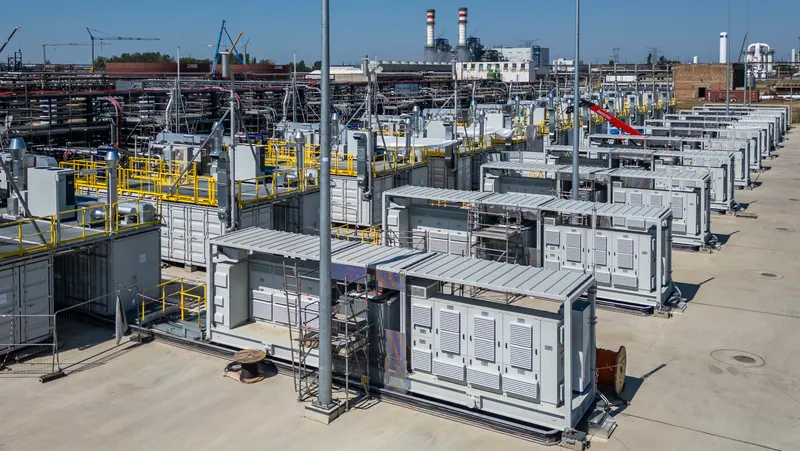


SGE and Blue Bird Energy plan a joint venture to deploy SMRs in Bulgaria
 Bulgaria
08.01.2026
Bulgaria
08.01.2026
The companies SGE and Blue Bird Energy have announced their intention to establish a joint venture aimed at the phased deployment of small modular reactors (SMRs) in Bulgaria. The project seeks to provide the country with affordable, zero-emission baseload electricity, support energy-intensive digital infrastructure—including AI data centers—and contribute to the decarbonization of district heating systems.
The joint venture is expected to cover the full project lifecycle, including site selection and preparation, licensing support, engineering and construction management, financing arrangements, and the safe, reliable, and commercially efficient operation of SMR facilities.
The technological basis of the initiative is the BWRX-300 reactor developed by GE Vernova Hitachi. Featuring passive safety systems and a modular design, the BWRX-300 is projected to significantly reduce construction timelines and capital costs—by up to 60% per installed megawatt—positioning it among the most competitive SMR solutions globally.
SGE, founded in 2019, is a co-investor in the standard BWRX-300 design and is currently advancing partnerships and projects in more than half a dozen European countries. Sofia-based Blue Bird Energy specializes in pre-investment studies, site selection, design, construction, and commissioning of SMR projects in Bulgaria. Its main shareholders include the construction and engineering group Glavbolgarstroy and the copper mining and processing company Assarel-Medet.
Comment by the Institute of Danube Research
From the perspective of the Danube Region, this initiative reflects a broader strategic shift toward combining climate neutrality, energy security, and industrial competitiveness. SMRs as sources of baseload power can mitigate the limitations of intermittent renewable energy while reducing dependence on fossil fuels. In the medium term, such projects may catalyze the formation of new cross-border value chains, foster technological cooperation among Danube countries, and expand the use of SMRs beyond electricity generation to district heating for urban and industrial agglomerations.

 Hungary
 Romania
 Ukraine
 Moldova
 Serbia

 Danube