

Development of the Danube Region Can Become a Tool for Reducing Inequality — Bulgaria’s Position
 Bulgaria
01.07.2026
Bulgaria
01.07.2026
The development of the Danube Region offers an opportunity to reduce socio-economic inequality, as some of Bulgaria’s least developed areas are located along the Danube. This was stated by Bulgarian Interior Minister Ivan Demerdzhiev during a joint briefing with Joachim Herrmann, Bavaria’s Minister of the Interior, Sport and Integration, in Sofia.
The briefing took place within the framework of the ministerial conference of the countries participating in the EU Strategy for the Danube Region. The discussions focused on security, economic resilience and policy coordination among the states connected by the Danube basin.
According to Demerdzhiev, the development of the Danube Region should be viewed not only as an infrastructure or economic priority, but also as a mechanism for overcoming territorial disparities. He emphasized that advancing the Danube Strategy could contribute to economic growth in Bulgaria’s depressed regions and gradually lead to greater convergence in the levels of development among the countries located along the Danube.
Special attention was paid to the security dimension of regional development. The Bulgarian side stressed that security is a fundamental prerequisite for competitiveness, investment attractiveness and sustainable economic development in the Danube area. Among the key issues discussed were counterterrorism, violent extremism, radicalization and cybercrime.
The conference participants also addressed challenges related to illegal migration, cross-border organized crime, cyber threats and hybrid risks. As a result of the meeting, common approaches were agreed upon to strengthen European coordination in the field of security in the Danube Region.
Comment by the Institute of Danube Research
Bulgaria’s position is indicative of a broader understanding of the future of the Danube Region. The EU Strategy for the Danube Region is increasingly moving beyond the framework of classical transport or environmental policy and is becoming a comprehensive instrument for territorial development, security and economic convergence.
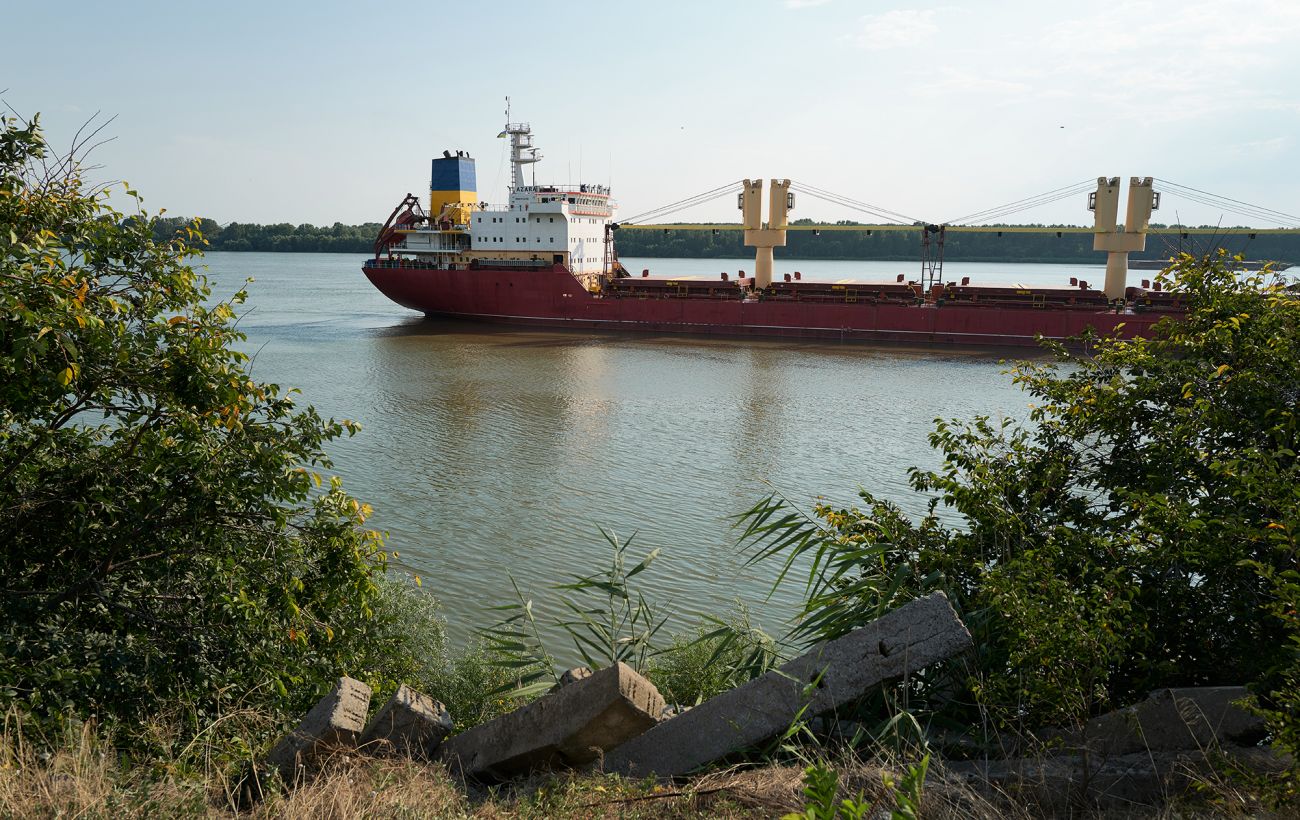
For Ukraine, this approach is of particular importance. The Ukrainian Danube area is also a territory where strategic logistics, border security, the need for infrastructure modernization and the task of overcoming peripheral status are closely interconnected. Since the beginning of the full-scale war, the Danube has become one of Ukraine’s key foreign trade routes. However, the long-term impact of this resource depends on whether the region will be integrated into sustainable European development policies.
Bulgaria’s experience demonstrates that the Danube should not be perceived as a peripheral river border, but as a space for economic equalization, security coordination and cross-border cooperation. For Ukraine, it is important to strengthen its participation in the EU Danube Strategy, develop its own state policy for the Ukrainian Danube region and use European mechanisms to modernize the port, transport, energy and social infrastructure of the region.
The development of the Danube is not only a matter of cargo flows. It is also a matter of quality of life for local communities, border security, access to investment and the state’s ability to transform strategic location into real territorial development.


 Hungary
 Romania
 Ukraine
 Moldova
 Serbia

 Danube