

EU Supports Moldova in Introducing Advanced Environmental Monitoring Technologies
 Moldova
22.10.2026
The Republic of Moldova is expanding cooperation with the European Environment Agency (EEA) in satellite-based environmental monitoring, air quality assessment and integration into European environmental information systems.
These issues were discussed during a meeting between Moldova’s Minister of Environment, Gheorghe Hajder, and Gülçin Karadeniz, a representative of the European Environment Agency.
Particular attention was given to the European Copernicus programme, which combines satellite observations with ground-based measurements. These technologies make it possible to monitor air quality, forest ecosystems and water resources, assess climate change and rapidly identify the impacts of droughts and wildfires.
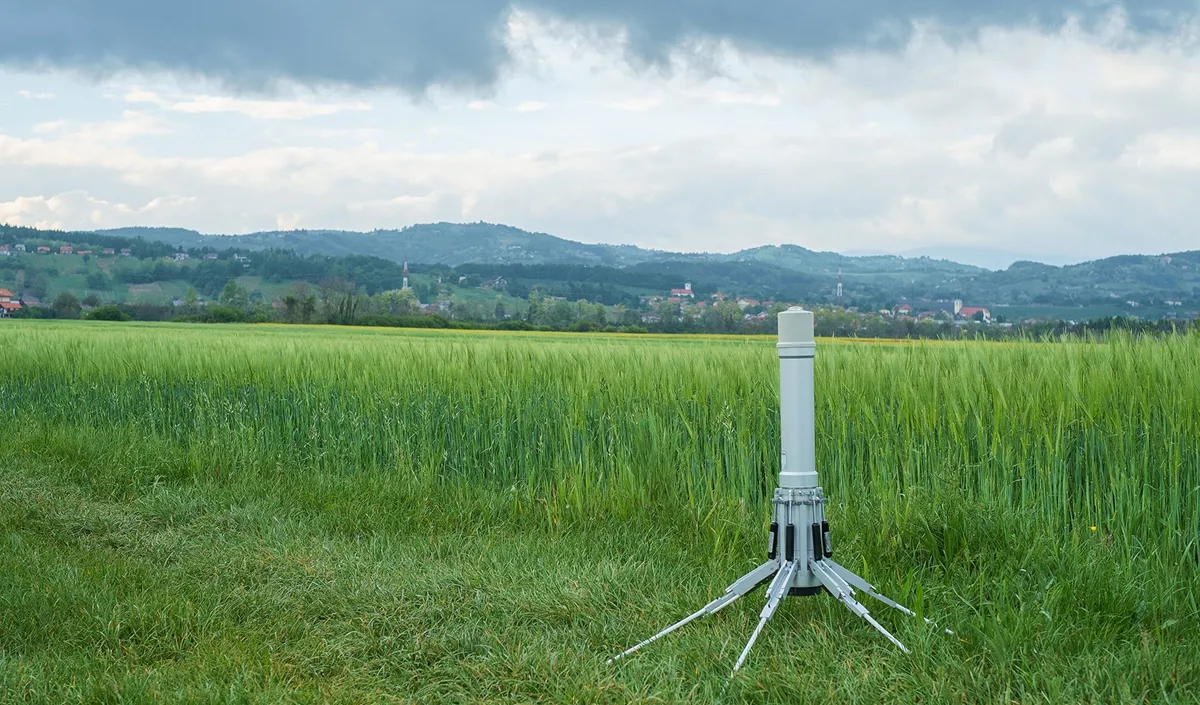
An important area of cooperation is the modernization of Moldova’s national air quality monitoring system, including the installation of 10 automated monitoring stations and the transmission of collected data to European information systems.
The participants also discussed opportunities for Moldovan specialists to participate in the European Environment Information and Observation Network (Eionet), exchange methodologies and practical experience, improve professional training and expand technical assistance to national environmental institutions.
Commentary by the Institute of Danube Research (IDR)
According to IDR experts, Moldova’s integration into European environmental monitoring systems is particularly important for strengthening environmental and water security across the Danube macro-region.
Combining Copernicus satellite data with automated ground-based observations creates opportunities to develop more effective early warning systems for environmental risks, including droughts, air pollution, degradation of aquatic ecosystems and the consequences of climate change.
These technologies are especially relevant to the transboundary river basins of the Dniester, Prut and Danube, where environmental processes directly affect water supply, agriculture, natural ecosystems and the socioeconomic development of border regions.
“For the countries of the Danube region, the transition from fragmented environmental observations to an integrated monitoring system based on comparable data, common methodologies and timely information exchange is essential. Such an approach will improve transboundary water resources management and strengthen the capacity to respond to environmental threats,” IDR experts emphasize.
The Institute notes that further integration of environmental information systems in Ukraine, Moldova and Romania could become an important practical component of the EU Strategy for the Danube Region, particularly in climate change adaptation, water resources management and the prevention of transboundary pollution.
At the same time, the effectiveness of modernization will depend not only on the installation of new equipment but also on continuous measurements, data reliability, professional training and automated information exchange with European partners.
 Romania

 Hungary
 Ukraine

 Bulgaria
 Danube

 Serbia