

LIFE Danube floodplains project receives top environmental award at LIFE Awards 2026
 Slovakia
17.06.2026
Slovakia
17.06.2026
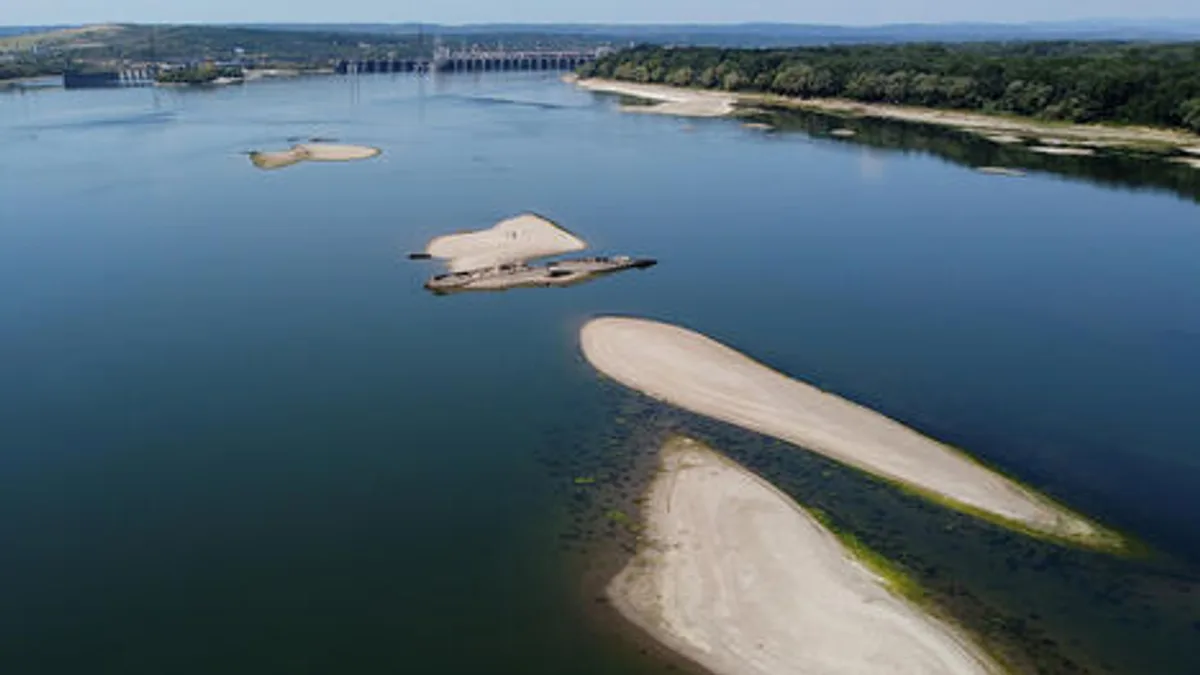
The LIFE Danube floodplains project, aimed at restoring the natural floodplains of the Danube in Slovakia and Hungary, has won the LIFE Awards 2026 in the category “Nature Protection and Biodiversity”. The award ceremony took place as part of European Green Week and became a recognition of one of the most significant practical examples of Danube ecosystem restoration.
The project started in 2015 and lasted nine years. Its budget amounted to approximately €6 million. The main objective was to restore natural floodplain habitats that had been systematically affected for two centuries by dam construction, river regulation, changes in the water regime and intensive land use.
Special attention was paid to the area between the Slovak villages of Dobrohošť and Sap, which is part of the inland Danube delta — a rare system of branching river arms. In the past, these river arms freely formed a natural wetland system that was important for biodiversity, the local microclimate, flood protection and the preservation of high-quality drinking water reserves.
As part of the project, a water regime closer to the natural one was restored. This made it possible to rewet old river arms and wetlands, creating better conditions for fish spawning, amphibian reproduction and the return of birds. In particular, an increase was recorded in the presence of herons, night herons, storks and the white-tailed eagle.
An important component was also the restoration of floodplain forests. Invasive and non-native plant species were removed from the area, including tree of heaven, Japanese knotweed, ash-leaved maple and other species that had altered the natural structure of ecosystems. They were replaced with native trees — alder, wild cherry, hornbeam, European ash, as well as grey, white and black poplar.
A separate area of the project concerned the restoration of traditional land-use practices. Extensive grazing was restored on meadows, along with the practice of willow pollarding. Local agricultural cooperatives and residents of nearby communities were involved in the implementation of these measures.
The project produced both environmental and socio-economic effects. It created jobs for local residents, including tractor drivers, shepherds, grooms, guides and forestry workers. This demonstrates that the restoration of natural ecosystems can be linked to local economic development, employment and sustainable territorial management.
Comment by the Institute of Danube Research
According to the Institute of Danube Research, the victory of LIFE Danube floodplains is important for the entire Danube region. It confirms that modern policy toward the Danube cannot be limited solely to navigation, port infrastructure or energy. The river requires an integrated approach in which ecological restoration, water security, flood protection and community development are viewed as interconnected elements.
According to Vitaliy Barvinenko, Director of the Institute, the experience of LIFE Danube floodplains is indicative for all countries of the Danube basin, including Ukraine. It shows that floodplain restoration is not a secondary environmental issue, but an element of long-term territorial security. It concerns flood protection, the preservation of water resources, support for biodiversity and the creation of new opportunities for local communities.
“For the Ukrainian Danube region, this example is particularly important. Our region has unique wetland ecosystems, but at the same time it is under pressure from infrastructural, climate-related and wartime challenges. That is why the future policy for Danube development must combine economic logic with environmental responsibility. Without restoring the natural functions of the river, it is impossible to speak of truly sustainable development of the Danube region,” said the Director of the Institute.
LIFE Danube floodplains demonstrates that the restoration of natural areas can be a practical instrument of European environmental policy. For Ukraine, this experience is a reference point in shaping its own approach to the management of Danube floodplains, water resources and protected natural areas.

 Bulgaria
 Hungary
 Romania
 Ukraine
 Moldova
 Serbia
 Danube