

Maersk launches temporary rail service via Constanța amid disruptions at Odesa ports
 Ukraine
07.08.2026
Ukraine
07.08.2026
Maersk Ukraine Ltd, the official representative office of the international shipping and logistics group A.P. Moller–Maersk, is launching a temporary rail service between the Romanian port of Constanța and Ukrainian container terminals in response to the current situation at the ports of the Odesa region.
The service will operate in both import and export directions until 1 October 2026 or until the situation stabilises. The transport price includes the processing of a T1 transit declaration.
According to the announced tariffs, the cost of transporting a container between Constanța and Odesa is USD 2,000 in both directions.
On the Constanța–Kyiv route, the tariff is USD 3,000 for imports and USD 1,500 for exports. For Ternopil, the corresponding rates are USD 2,400 for imports and USD 1,400 for exports.
The alternative route is being introduced amid growing challenges affecting maritime logistics in the Odesa region and the need to maintain continuity in international container transport.
The Port of Constanța is serving as a maritime hub through which cargo can be integrated into Maersk’s global network, while rail transport provides onward connections between Romania and Ukraine.
A.P. Moller–Maersk is one of the world’s largest transport and logistics groups. The company operates global container shipping services and provides integrated logistics solutions in more than 130 countries.
Comment by the Institute of Danube Research
The Institute of Danube Research notes that Maersk’s decision goes beyond a temporary rerouting of cargo by an individual shipping company. It demonstrates how international logistics networks can rapidly adapt to security risks in the Black Sea region.
Constanța is increasingly assuming the role of a reserve maritime hub for Ukraine, capable of handling container flows that would normally be directed to ports in the Odesa region and transferring them by rail to Ukrainian logistics centres.
This is effectively creating a parallel transport axis linking Constanța – the Ukrainian border – Odesa/Kyiv/Western Ukraine, which can help sustain foreign trade during periods of heightened security risks affecting maritime navigation.
The container dimension is particularly important. Unlike bulk cargo, for which the Danube can serve as a major alternative to seaports, container transport requires a developed network of terminals, regular rail connections and integration with global maritime services. Constanța is currently able to combine all these elements.
At the same time, alternative routes cannot fully replace direct access to the ports of Greater Odesa. They generally increase transport distances, the number of transshipment operations and overall logistics costs. Their primary function is therefore not to replace Ukrainian seaports, but to increase the resilience of the transport system through the availability of alternative routes.
For Ukraine, the strategic priority is to further develop railway border crossings with Romania, terminal infrastructure, container train services and digital coordination of freight flows. In this context, the ports of Greater Odesa, Ukraine’s Danube ports, Constanța and overland transport corridors to the EU should increasingly be considered as elements of a single integrated system.
Maersk’s decision confirms a broader trend: the transport systems of Ukraine, Romania and the Lower Danube are becoming increasingly integrated into a single multimodal logistics network of the Black Sea–Danube region.

 Bulgaria
 Hungary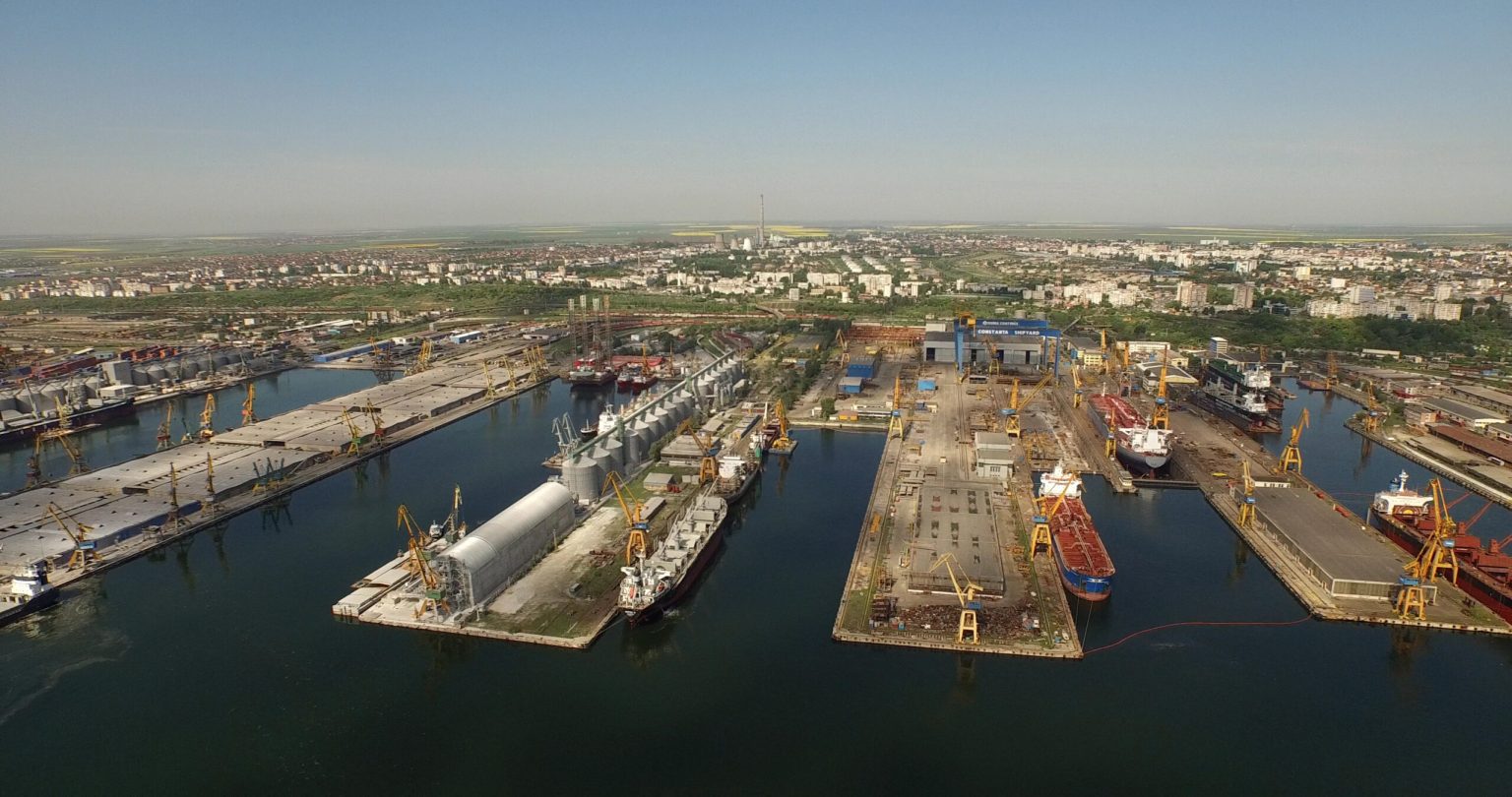
 Romania

 Moldova
 Serbia

 Danube