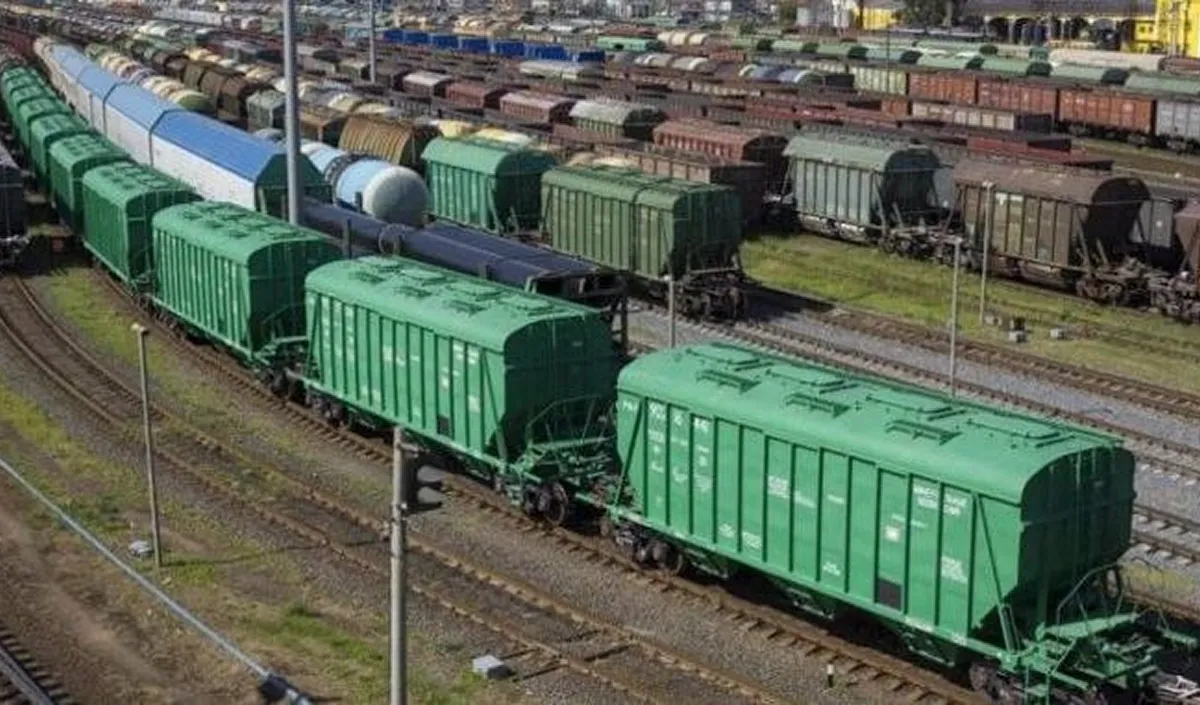


Modernisation of the Ports of Varna and Burgas Will Strengthen Transport Links Between Europe, the Caucasus and Asia
 Bulgaria
07.10.2026
Bulgaria views the modernisation of the Black Sea ports of Varna and Burgas as one of the key elements in strengthening transport connectivity between Europe, the Black Sea region, the Caucasus and Central Asia. At the same time, increasing the capacity of railway and road infrastructure towards Türkiye is expected to create additional opportunities for attracting international freight flows to Bulgaria’s transport system.
These issues were discussed during a meeting between Bulgarian Minister of Transport and Communications Georgi Peev and Secretary General of the Permanent Secretariat of the Intergovernmental Commission TRACECA, Jasurbek Choriyev, at the Ministry of Transport and Communications.
One of the central topics of the talks was the development of the Trans-Caspian International Transport Route, commonly known as the Middle Corridor, which forms an alternative multimodal route between China, Central Asia and Europe through the Caspian Sea, the South Caucasus and the Black Sea–Balkan region.
The Bulgarian side stressed that the country’s geographical position on the western coast of the Black Sea enables Varna and Burgas to become important European entry points for freight transported along the Middle Corridor.
According to Georgi Peev, Bulgaria places particular importance on integrating its national transport network with international corridors in both the North–South and East–West directions. Port modernisation must therefore proceed in parallel with the development of railway and road connections, since the capacity of inland infrastructure will determine how quickly cargo can move from Black Sea ports towards European Union markets.
During the discussions, Jasurbek Choriyev also highlighted the substantial investment potential associated with international transport connectivity. According to estimates presented at the meeting, European investment in relevant transport projects over the next decade could reach approximately EUR 10 billion.
TRACECA is also developing a new digital map of transport projects. Bulgaria has been invited to submit strategic infrastructure projects identified by the government, as well as initiatives included in action plans agreed with the European Union.
Prior to the ministerial meeting, the TRACECA Secretary General held discussions with representatives of Bulgarian transport companies and state institutions, during which the country’s major current and planned infrastructure projects were presented.
Comment by the Institute of Danube Research
The Institute of Danube Research notes that the modernisation of Varna and Burgas should not be viewed merely as a Bulgarian port development project, but rather as part of a broader transformation of the transport architecture of the Black Sea–Danube region.
The Middle Corridor is gradually evolving from the concept of an alternative route between Asia and Europe into a comprehensive multimodal transport system. Competition is increasingly taking place not only between individual ports, but between entire logistics chains. The decisive factors are becoming the speed of transshipment, railway capacity, digitalisation of procedures, predictability of border controls and the ability to redirect cargo efficiently between maritime, rail, road and inland waterway transport.
TRACECA estimates the current freight volume along the Trans-Caspian route at approximately 4.5 million tonnes, while its long-term capacity could reach up to 30 million tonnes. One of the key objectives is to reduce cargo delivery times to approximately 15 days.
For Bulgaria, this creates an opportunity to strengthen the role of Varna and Burgas as the western Black Sea gateways of the Middle Corridor. However, the realisation of this potential will depend on how effectively port modernisation is coordinated with railway and road infrastructure development.
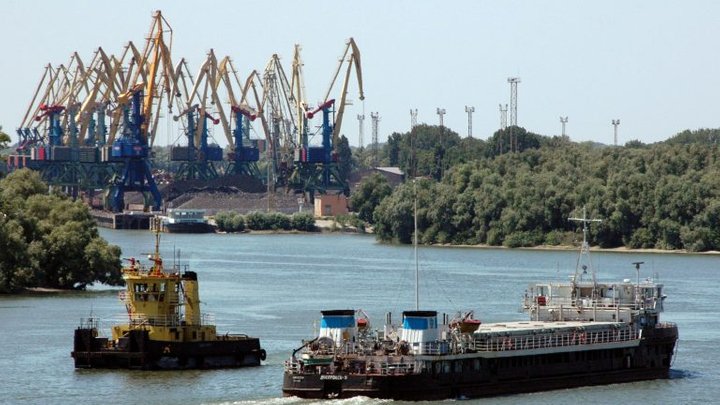
The connection between the Black Sea and the Danube transport system is of particular importance. The Varna–Ruse railway axis effectively links the Black Sea with the Danube and creates opportunities for multimodal transport routes towards Central Europe. The development of Bulgaria’s ports could therefore influence not only Black Sea logistics but also the redistribution of freight flows across the broader Danube region.
These processes are strategically important for Ukraine as well. The emergence of a new logistics architecture in the Black Sea region creates opportunities for routes connecting Ukrainian Danube and Black Sea ports with Romania, Bulgaria, Türkiye, the Caucasus and, further east, Central Asia.
In the longer term, this is no longer merely about competition between individual ports for cargo. It is about the formation of an interconnected system of transport corridors linking the Black Sea, the Danube, the Caucasus, the Caspian region and Central Asia.
Director of the Institute of Danube Research Vitaliy Barvinenko believes that Bulgaria’s growing activity reflects a broader transformation in the transport geography between Europe and Asia.
“The modernisation of Varna and Burgas is much more than the upgrade of two Bulgarian ports. We are witnessing the formation of a new transport system in which the Black Sea is becoming one of the key western segments of the Middle Corridor.
Within such a system, having a modern port alone is not sufficient. What is required is an uninterrupted logistics chain: port — railway — road network — Danube — border — European transport corridors. This is why Bulgaria is simultaneously discussing the modernisation of Varna and Burgas and increasing the capacity of transport links towards Türkiye.
For Ukraine, this is an important signal. Ukrainian Danube and Black Sea ports should not be viewed in isolation, but rather as a potential component of a much broader transport area extending from Central Asia and the Caucasus to Central Europe.
The faster Ukraine, Romania, Bulgaria and Moldova can synchronise the development of their port, railway, inland waterway and border infrastructure, the greater the role of the entire Black Sea–Danube region will be in the emerging trade system between Europe and Asia.
In essence, the competition today is no longer merely for individual cargo flows, but for a place on the map of future international transport corridors. The Danube and the Black Sea have every prerequisite to become one of the key transport hubs of this system,” Vitaliy Barvinenko said.

 Romania

 Hungary
 Ukraine


 Moldova

 Danube



 Serbia