

Moldova and Romania Implement Cross-Border Disaster Prevention Project
 Romania
12.08.2026
Romania
12.08.2026
The Republic of Moldova and Romania have launched a new cross-border project aimed at strengthening regional preparedness for natural disasters, climate-related risks and emergency situations. The total value of the initiative exceeds €1.5 million.
The “Disaster Prevention” project is being implemented by the Hîncești District Council in Moldova and the Galați County Council in Romania under the Interreg NEXT Romania–Republic of Moldova 2021–2027 Programme.
The main objective of the initiative is to strengthen the capacity of public authorities and local communities in the two border regions to prevent and mitigate the consequences of extreme weather events and emergencies. The project provides for investments in specialised equipment, monitoring and early-warning systems, as well as improved mechanisms for cross-border planning and coordination.
The total project budget amounts to €1,522,725.99, of which €1,370,453.39 represents non-reimbursable funding and €152,272.60 is co-financing.
In Galați County, a multifunctional vehicle will be purchased for road maintenance and emergency response operations. In addition, two monitoring and early-warning systems will be installed on the DJ 242D Băneasa–Rogojeni and DJ 242E Băneasa–Oancea road sections. The total value of these investments on the Romanian side is approximately €1.036 million.
In Hîncești District, the project provides for the purchase of a specialised emergency-response vehicle worth approximately €300,000.
Comment by the Institute of Danube Research
The Institute of Danube Research notes that the significance of this project goes beyond the technical modernisation of regional emergency services.
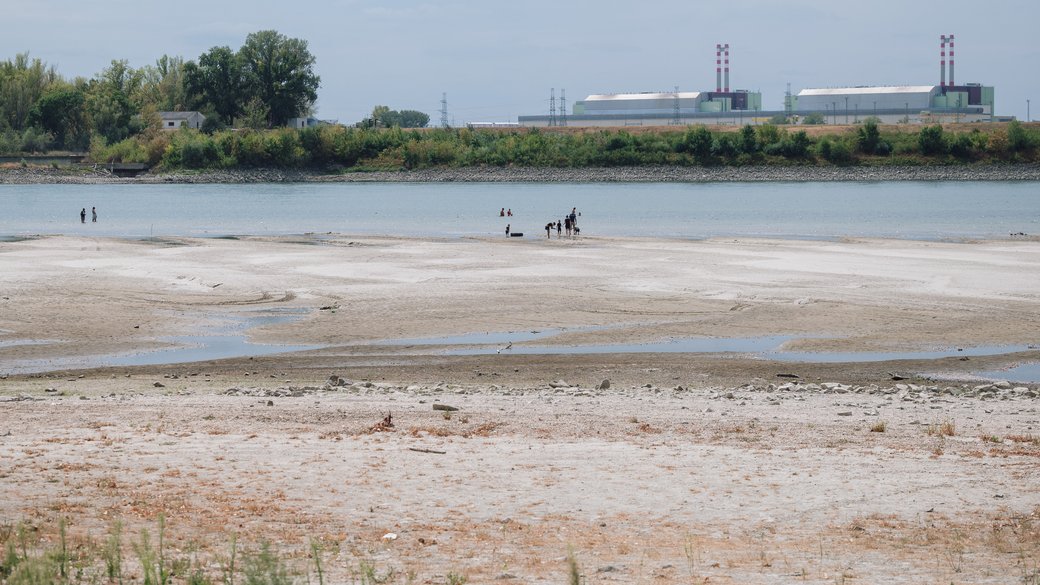
For the Danube–Prut area, climate-change adaptation is gradually becoming one of the key components of regional security. Droughts, floods, heavy rainfall, temperature anomalies and the resulting damage to transport and municipal infrastructure are increasingly transboundary in nature. Effective response therefore requires not only the resources of individual communities or regions, but also a coordinated system of forecasting, early warning and joint risk management.
It is particularly important that Interreg funding supports both technical infrastructure and institutional cooperation. Such an approach makes it possible to move from responding to the consequences of emergencies toward their systematic prevention.
This experience is also of practical relevance for Ukraine. The border regions of Ukraine, Moldova and Romania form an interconnected natural, transport and socio-economic space. Therefore, the development of similar joint systems for monitoring floods, droughts, critically low water levels, wildfires and other climate-related risks could become a promising area of trilateral cooperation.
According to the Institute of Danube Research, climate resilience should gradually become a distinct component of regional policy in the Lower Danube, alongside transport security, water-resource management, energy and environmental protection. A cross-border approach makes it possible to build response systems that correspond to the actual scale of natural risks, which do not stop at administrative or national borders.

 Bulgaria
 Hungary

 Ukraine
 Moldova
 Serbia

 Danube