

Moldova Begins Preparations for Land Expropriation for the Bălți–Suceava Power Line
 Moldova
05.10.2026
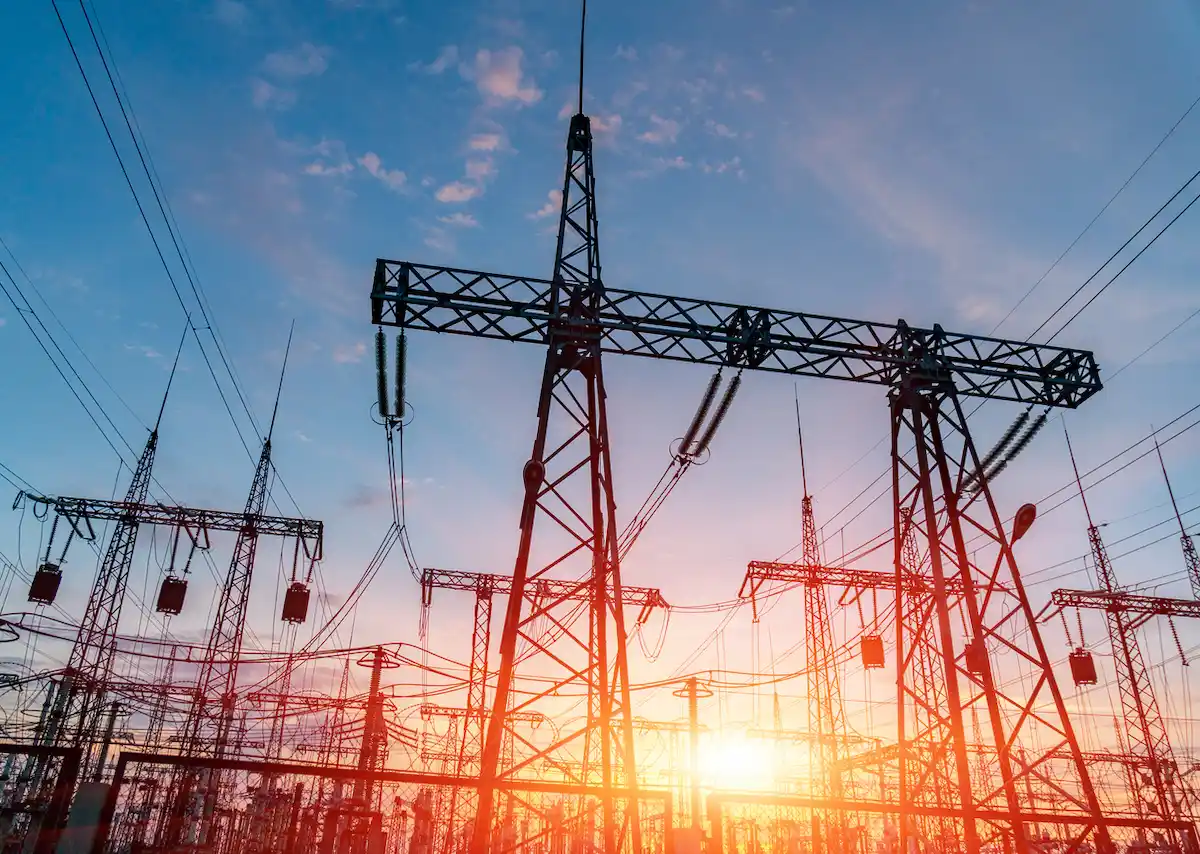
The Ministry of Energy of the Republic of Moldova has started preparing a government decision on the expropriation of real estate and land-use rights required for the construction of the 400 kV Bălți–Suceava overhead power transmission line.
The corresponding draft has been published on the government platform particip.gov.md. The consultation process is taking place from 1 to 15 October 2026. According to the Ministry of Energy, the decision is being prepared as part of the project “Interconnection of the Electricity Networks of the Republic of Moldova and Romania, Phase II.” Government approval is expected in December 2026.
On 26 June 2026, Moldelectrica signed a contract with the Turkish company SA-RA for the design, supply of equipment and construction of the Moldovan section of the power line. The contract is worth EUR 17.5 million and is to be implemented over 24 months.
The line will be approximately 45 kilometres long on Moldovan territory and will pass through 12 settlements in the Glodeni, Fălești, Bălți and Rîșcani areas.
The project includes not only the installation of transmission towers and the construction of the high-voltage line, but also the integration of the new infrastructure into Moldelectrica’s transmission network. According to the Moldovan authorities, the new interconnection should increase cross-border electricity exchange capacity with Romania and strengthen the operational resilience of the national power system.
The Romanian section of the project is already at a more advanced stage. Transelectrica launched the implementation of the 400 kV Gădălin–Suceava and Suceava–Bălți lines on 21 October 2025.
The Suceava–Bălți section on Romanian territory will be around 93 kilometres long, cross 17 settlements in Suceava and Botoșani counties, and include the construction of 302 high-voltage transmission towers.
Thus, once the expropriation procedures on the Moldovan side are completed, the legal conditions will be in place for the project to move from the preparatory phase to full-scale construction.
Comment by the Institute of Danube Research
The Institute of Danube Research notes that the Bălți–Suceava power line should not be viewed as an isolated infrastructure project, but rather as part of the systemic transformation of the Republic of Moldova’s energy geography.
The new line will create an additional physical channel for integrating Moldova’s power system with Romania’s and, consequently, with the European electricity network. Its strategic importance lies above all in diversifying electricity supply routes and reducing the system’s dependence on a limited number of cross-border interconnections.
It is also important that Bălți–Suceava is being developed alongside other new interconnection projects. As a result, this is no longer simply about creating a backup route, but about establishing a multi-vector configuration of electricity links between Moldova and Romania. This should improve system resilience to accidents, generation shortages or changes in electricity flow patterns.
There is also a significant economic dimension. Greater cross-border transmission capacity can potentially expand Moldova’s access to competitive electricity from the European Union and create additional opportunities for integrating new renewable generation capacity.
At the same time, the expropriation stage is critically important for the project’s implementation schedule. In major transmission infrastructure projects, land acquisition and permitting procedures are often among the principal causes of delay. Therefore, synchronising construction on the Moldovan and Romanian sections will be no less important than the technical construction work itself.
From a strategic perspective, Bălți–Suceava is not merely another power line. It is another element in Moldova’s transition from a model of energy dependence towards a model of physical integration with the energy system of the European Union.
 Romania

 Hungary

 Ukraine





 Bulgaria
 Danube

 Serbia