

Romania Accelerates Construction of the A7 Motorway Toward Ukraine: A New Corridor to the EU and Constanța — but Bypassing Moldova
 Romania
25.08.2026
Romania
25.08.2026
Romania is accelerating the implementation of one of its largest infrastructure projects in the eastern part of the country — the A7 “Moldova” Motorway, which is forming a new high-speed transport axis from south to north toward the Ukrainian border.
For Ukraine, this project is important far beyond bilateral road connectivity. In fact, a new transport corridor is emerging that will directly connect the Romanian-Ukrainian border with Romania’s central transport system and, through it, with the Port of Constanța, the Balkans and the European TEN-T network.
The main section of the A7, Ploiești–Pașcani, approximately 319 km long, is designed as a motorway with two lanes in each direction. It runs through Buzău, Focșani and Bacău and forms part of the core TEN-T network. Romanian government documents explicitly state that the project is intended to provide future transport links with the borders of Ukraine and the Republic of Moldova.
In 2026, construction on the northern sections intensified significantly. Romania’s objective is to create a continuous high-speed connection between Bucharest and Pașcani, with a total length of about 397 km when the A3 Bucharest–Ploiești motorway is included. Several sections are already at an advanced stage of completion.
The strategic significance of the project increases considerably north of Pașcani. Romania is developing the continuation of the high-speed road through Suceava toward Siret, directly to the Siret–Porubne border crossing with Ukraine.
The northern section of the corridor has not only civilian but also dual civilian and military significance. The infrastructure is increasingly viewed in the broader context of strategic mobility on the eastern flank of the EU and NATO.
The Romanian-Ukrainian component already extends beyond Romanian territory. Ukraine and Romania have agreed on a joint infrastructure project for the Porubne–Siret direction, which envisages the development of a high-speed connection to the Ukrainian border and modernization of the Ukrainian M19 road toward Chernivtsi.
At the same time, the Porubne–Siret border checkpoint is also being modernized, including its freight infrastructure.
For Ukraine, the emergence of this corridor has at least three strategic implications.
First, it creates an additional direct road connection to the transport system of the European Union, particularly important for Chernivtsi region as well as western and central Ukraine.
Second, it improves access to Romania’s port system. Through the A7, the Bucharest road network and the A2 motorway, freight flows may receive a more predictable route to the Port of Constanța, whose role in Ukrainian foreign trade has increased substantially since the beginning of the full-scale war.
Third, the corridor has a clear strategic mobility dimension. The road is being developed with the capacity to accommodate heavy freight and military equipment. Thus, civilian transport infrastructure simultaneously becomes an element of the broader security architecture of Europe’s eastern flank.
In the post-war period, the same corridor could be used for large-scale transport of construction materials, machinery, equipment and other resources needed for Ukraine’s reconstruction.
Comment by the Institute of Danube Research: A Strong Route for Ukraine, but a Warning Signal for Moldova
The Institute of Danube Research draws attention to another fundamental aspect of the new corridor: its geography makes it possible to organize major transport flows between Romania and Ukraine without transit through the territory of the Republic of Moldova.
This does not mean that the Moldovan route will lose its importance. On the contrary, under wartime conditions Ukraine needs the maximum possible number of independent logistics corridors. However, the development of the A7 is changing the competitive configuration of transport routes across the region.
Until recently, Moldova enjoyed a natural geographical advantage as a transit territory between southern Ukraine, Romania and the Danube–Black Sea transport system. The development of direct Romanian-Ukrainian routes gradually reduces dependence on that geographical factor.
In the view of the Institute of Danube Research, this should serve as a signal for Moldova to accelerate its own infrastructure projects. The issue is not competition with Romania, but the need to integrate Moldovan territory into the emerging European transport architecture in such a way that it does not turn from a transit link into a territory that major freight flows can bypass.
Particular importance should be attached to the modernization of road and rail crossings along the Ukraine–Moldova–Romania axis, the development of the Giurgiulești–Reni–Galați corridor, increased railway capacity, new bridges across the Prut and deeper integration of Moldova’s transport network into TEN-T.
For Ukraine, the optimal scenario is one in which the A7 does not replace the Moldovan route, but complements it. The greater the number of independent corridors Ukraine has toward Romania, the Danube, Constanța and Central Europe, the more resilient its logistics system will be.
In a broader context, the construction of the A7 demonstrates an important trend: the war has accelerated the formation of a new transport architecture along the eastern border of the European Union. Infrastructure projects are increasingly serving economic, logistical, defence and geopolitical objectives simultaneously.
For this reason, the A7 should be viewed not simply as a new Romanian motorway, but as one of the future strategic transport corridors linking the European Union and Ukraine.

 Bulgaria
 Hungary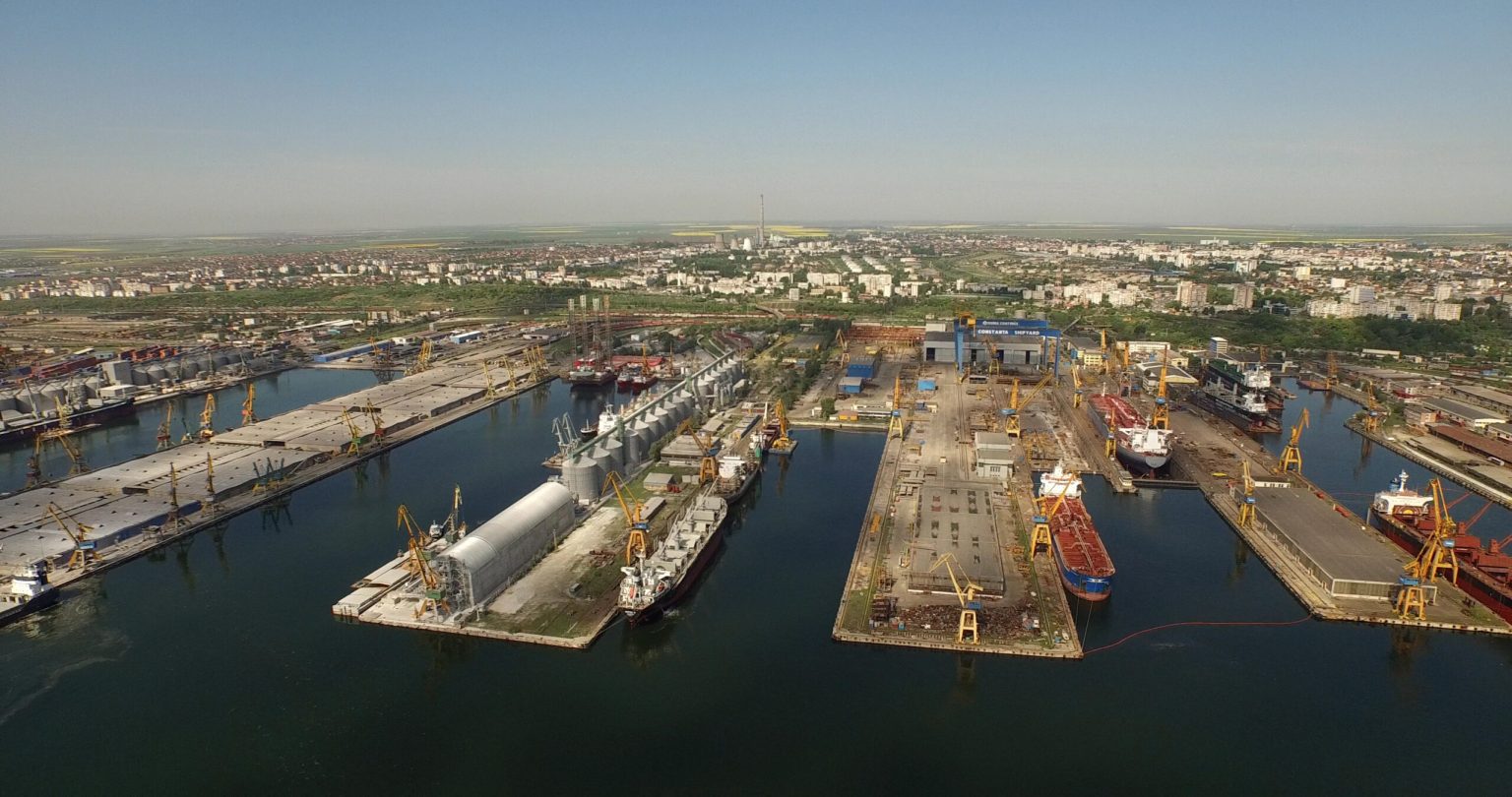

 Ukraine
 Moldova
 Serbia

 Danube