

Romania Alters Danube Flow to Maintain Water Supply to the Cernavodă Nuclear Power Plant
 Romania
04.08.2026
Romania
04.08.2026
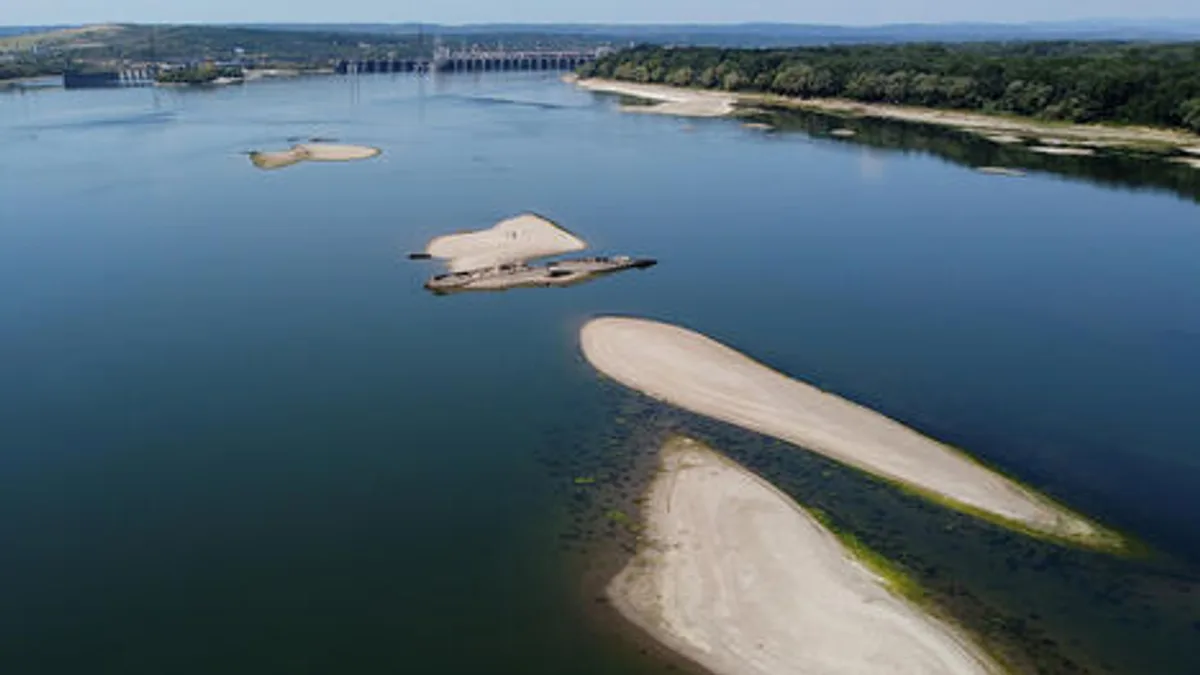
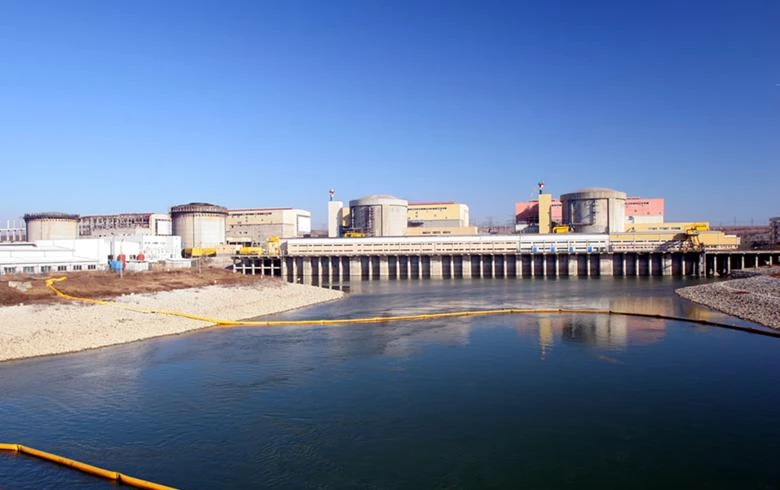
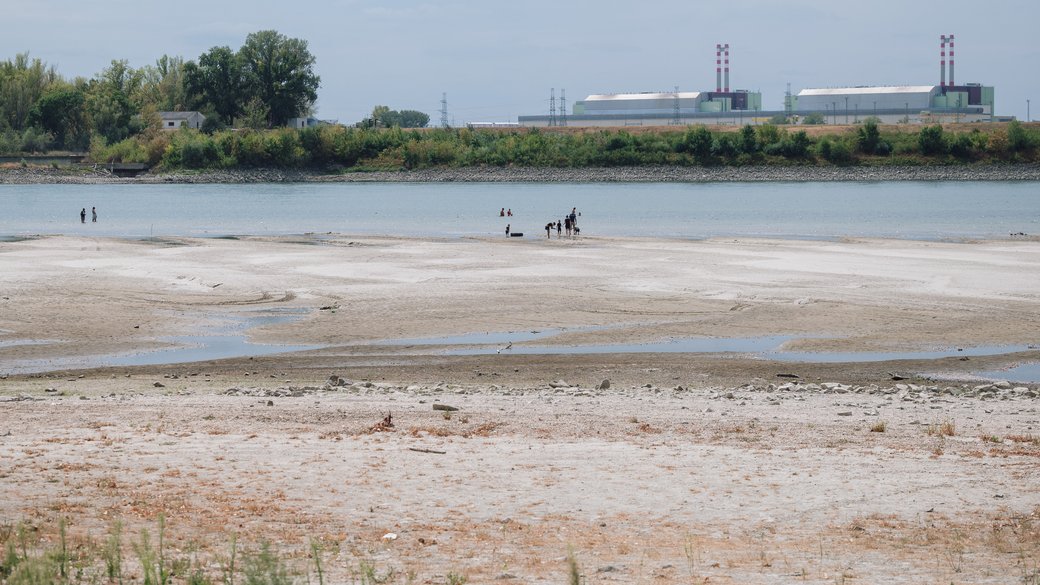
Romanian authorities are carrying out an emergency hydraulic engineering operation on the Danube aimed at increasing the volume of water reaching the cooling systems of the Cernavodă Nuclear Power Plant. The intervention became necessary because of the prolonged decline in the river’s water level and the approach of discharge rates to historically low values.
On Monday, 3 August 2026, Romanian Navy divers carried out a controlled explosion of the Pârjoaia rock formation near the Bala branch of the Danube. Approximately 180 kilograms of explosives were used to break up the rock. A previous attempt on 2 August failed to displace the formation sufficiently, prompting the military to increase the explosive charge.
According to Romanian media reports, the latest explosion destroyed a significant part of the rock formation and improved water passage through the area.
The purpose of the operation is not to alter the entire course of the Danube, but to redistribute water flow between the Bala branch and the Old Danube. During periods of extremely low water, the Bala branch diverts a substantial share of the river’s discharge, while the Cernavodă Nuclear Power Plant depends on sufficient water levels in the main navigable channel.
The operation consists of two interrelated stages. Following the removal of the rock obstruction, Romanian authorities plan to construct a temporary flow-diversion structure. This may involve the controlled sinking of four barges loaded with stone. Each barge is approximately 70 metres long and three metres high.
The proposed structure is intended to partially reduce the amount of water entering the Bala branch and redirect a larger share of the flow towards the Old Danube and the nuclear power plant’s water intake facilities.
The emergency works are being conducted amid a sharp deterioration in hydrological conditions throughout the Danube basin. According to forecasts by Romanian hydrological institutions, the Danube discharge at the entrance to Romania, near Baziaș, may fall to approximately 1,400–1,450 cubic metres per second.
This is almost three times lower than the long-term average for August, which stands at approximately 3,900 cubic metres per second.
Low water levels have already affected Romania’s energy system. One of the two units at the Cernavodă Nuclear Power Plant has been taken out of operation, while the continued functioning of the remaining unit depends on maintaining a stable supply of cooling water. Romania has also been compelled to increase electricity imports and introduce measures to reduce consumption.
The Cernavodă Nuclear Power Plant uses Danube water to remove heat from turbine condensers. The technological process requires large and relatively stable volumes of water. A significant decline in available water resources can therefore directly affect the safe and uninterrupted operation of the generating units.
The consequences of the Danube’s declining water level are regional in scale. In Hungary, the Paks Nuclear Power Plant, which produces more than 40 per cent of the country’s electricity, has been forced to sharply reduce output. As of 4 August, the facility continued to operate at approximately 240 MW, or around 10 per cent of its installed capacity.
A slight temporary rise in the Danube water level helped avert a complete shutdown, but the risk of generation being suspended remains.
Comment by the Institute of Danube Research
The situation surrounding the Cernavodă Nuclear Power Plant demonstrates that the declining water level of the Danube is no longer solely an environmental or navigational issue. It is increasingly becoming a direct threat to the energy, economic and infrastructure security of the countries of the Danube region.
The controlled demolition of the rock formation and the construction of a temporary flow-diversion structure may produce the required short-term result. However, such measures constitute an emergency response rather than a long-term solution.
Their implementation also requires detailed hydrodynamic modelling, as the redistribution of water between river branches may affect navigational depths, current velocity, sediment transport, floodplain ecosystems and the water supply of downstream territories.
The possible sinking of barges loaded with stone requires particular attention. Such a structure would effectively function as a temporary underwater dam. Its parameters must be calculated carefully to prevent uncontrolled riverbed erosion, the formation of hazardous currents or long-term morphological changes to the river channel.
Developments in Romania and Hungary confirm the need to move away from fragmented national crisis responses towards a coordinated Danube-wide policy for adapting to periods of low water.
Such a policy should include coordinated water-resource management, modernisation of cooling systems at major energy facilities, development of closed-loop or hybrid water-use systems, coordination of hydropower operations and the creation of a unified early-warning system for critically low river discharge.
For Ukraine, the situation is also of strategic importance. The declining water level affects the operation of the ports of Reni, Izmail and Ust-Danube, international transport corridors, export logistics and the ecological condition of the Danube Delta.
Ukraine should therefore participate fully in the development of joint mechanisms for managing low-water periods within the International Commission for the Protection of the Danube River and the European Union Strategy for the Danube Region.
The current crisis shows that the Danube must be viewed as a single natural, energy and logistics system. Local engineering interventions may temporarily stabilise conditions in an individual sector, but the resilience of the region as a whole will depend on long-term coordination among basin countries, the development of climate-adapted infrastructure and adequate preparation for the projected increase in the frequency of extreme low-water periods.

 Bulgaria
 Hungary

 Ukraine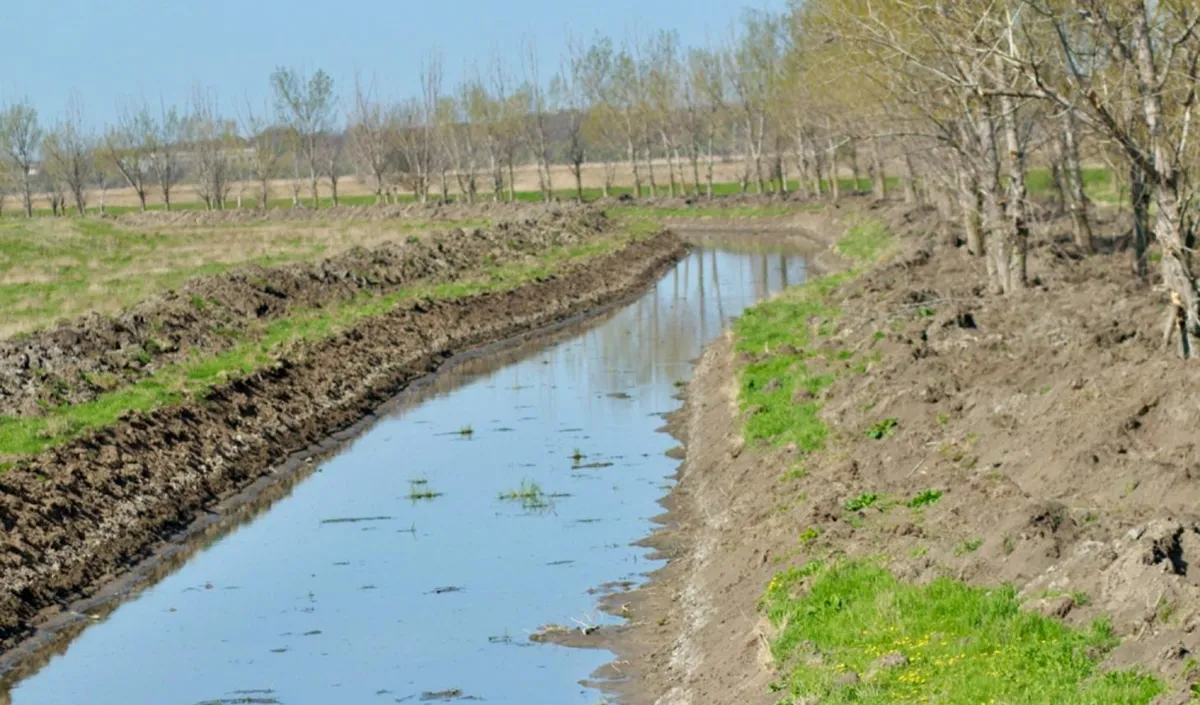
 Moldova
 Serbia

 Danube