

Romania and Moldova Account for Nearly 40% of Ukraine’s Road-Based Agricultural Exports
 Romania
16.09.2026
During the first ten days of September, Ukraine exported 113,700 tonnes of agricultural and food products through road border crossings. According to SPIKE BROKERS analysts, the average daily volume amounted to 11,370 tonnes.
The largest volume was transported across the Ukrainian-Polish border — 49,300 tonnes, representing 43.3% of total road exports. Romania handled 24,600 tonnes, or 21.6%, while 19,900 tonnes, or 17.5%, were exported through the Republic of Moldova.
The Hungarian route accounted for 13,800 tonnes, or 12.1%, while 6,200 tonnes, or 5.4%, were transported through Slovakia.
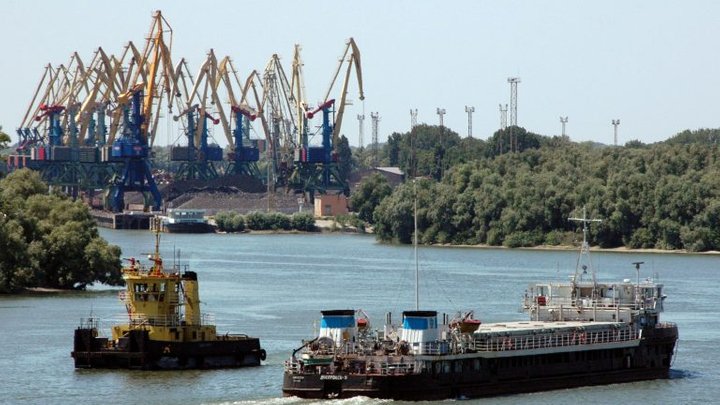
The combined share of the Romanian and Moldovan routes thus reached 39.1% of Ukraine’s road-based agricultural and food exports. This confirms the growing importance of the south-western transport corridor, which connects Ukrainian cargo flows with Romanian infrastructure and the ports of the Danube and Black Sea basins.
Poultry meat was the leading export category, totalling 10,300 tonnes. Road transport was also used to export:
-
7,500 tonnes of sunflower oil;
-
6,900 tonnes of rapeseed;
-
6,800 tonnes of fruit and nuts;
-
5,600 tonnes of ethyl alcohol;
-
5,400 tonnes of sugar;
-
4,900 tonnes of soybean meal.
Comment by the Institute of Danube Research
The figures for the first ten days of September demonstrate that the EU–Ukraine Solidarity Lanes remain an important instrument for diversifying Ukrainian exports. At the same time, the combined share of Romania and Moldova, approaching 40%, highlights the strategic importance of the south-western route.
Its further development requires coordinated border-crossing operations, the digitalisation of customs and veterinary procedures, increased border infrastructure capacity, and closer integration of road transport with the Danube ports and the Romanian port of Constanța.
Road transport cannot replace maritime, river or rail services for bulk cargo. However, it provides essential flexibility for the export of higher-value and perishable products. It should therefore be developed as part of an integrated multimodal system connecting Ukraine, Moldova and Romania with European Union markets.


 Hungary
 Ukraine

 Moldova



 Bulgaria
 Danube

 Serbia