

Romania expands green hydrogen production: OMV Petrom to reach 55 MW at Petrobrazi
 Romania
31.08.2026
Romania
31.08.2026
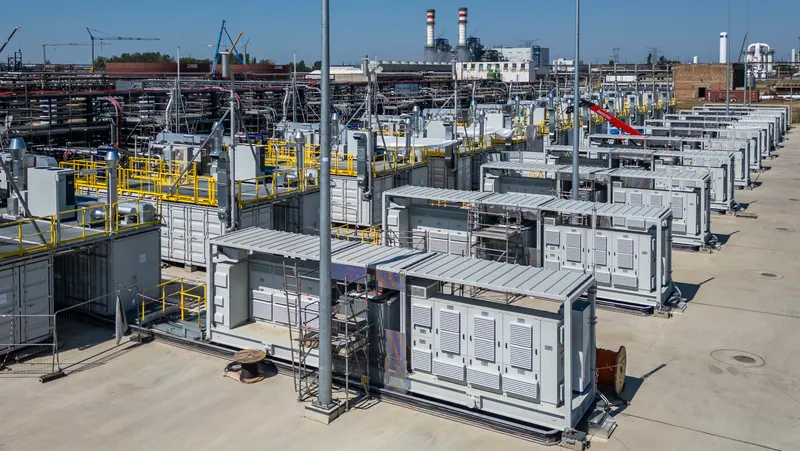
OMV Petrom, the largest integrated energy producer in Southeastern Europe, is expanding its green hydrogen production capacity at the Petrobrazi refinery to 55 MW following the delivery of all seven modules for its second 35 MW electrolyser.
Together with the previously announced 20 MW unit, the two projects will provide Petrobrazi with a total installed green hydrogen production capacity of 55 MW.
The second project consists of seven 5 MW electrolyser modules supplied by the German company Neuman & Esser. The modules have been delivered to Petrobrazi over the past two months and are currently being integrated into the refinery’s infrastructure.
Construction works, logistics, component manufacturing and module assembly are being carried out by Kraftanlagen Romania in cooperation with local suppliers.
The 35 MW project benefits from approximately EUR 29 million in non-reimbursable funding under Romania’s National Recovery and Resilience Plan (PNRR).
Once commissioned, the unit is expected to produce around 4,700 tonnes of green hydrogen annually, using electricity generated from renewable sources.
Combined, the two green hydrogen projects with a total capacity of 55 MW are expected to produce approximately 8,000 tonnes of green hydrogen per year.
The hydrogen will be used in refinery processes, particularly for the production of Sustainable Aviation Fuel (SAF) and Hydrotreated Vegetable Oil (HVO) derived from vegetable oils and used oils.
At the same time, OMV Petrom is developing a new SAF/HVO production unit at Petrobrazi with an annual capacity of 250,000 tonnes. The company expects the project to make it the first major producer of sustainable fuels of this scale in Southeastern Europe.
According to OMV Petrom, SAF and HVO can reduce CO₂ emissions by at least 65% over their entire life cycle compared with conventional fuels, while remaining compatible with existing fuel infrastructure.
Institute of Danube Research:
The Petrobrazi project illustrates an important shift in the development of hydrogen energy in Southeastern Europe: green hydrogen is moving from pilot projects towards direct large-scale industrial use.
Particularly significant is the integration of renewable electricity, electrolysis, refining and the production of SAF and HVO within one industrial system. Green hydrogen is therefore becoming not merely a separate energy commodity but an instrument for the comprehensive decarbonisation of industrial and transport sectors.
For Romania, the project also contributes to the formation of a new area of energy and industrial specialisation and strengthens the country’s position in Southeastern Europe’s emerging low-carbon economy. The development of SAF production is especially important in view of progressively stricter European requirements for the decarbonisation of aviation.
For Ukraine, Romania’s experience is highly relevant in the context of post-war industrial reconstruction. Combining renewable generation, green hydrogen production and its direct application in industrial processes could become one of the promising pathways for integrating the Ukrainian economy into the EU’s emerging low-carbon industrial model.

 Bulgaria
 Hungary
 Ukraine
 Moldova
 Serbia
 Danube