

Scientists Ask Odesa Regional Military Administration to Support a Comprehensive Environmental and Energy Project for the Ukrainian Danube Region
 Ukraine
24.07.2026
Ukraine
24.07.2026
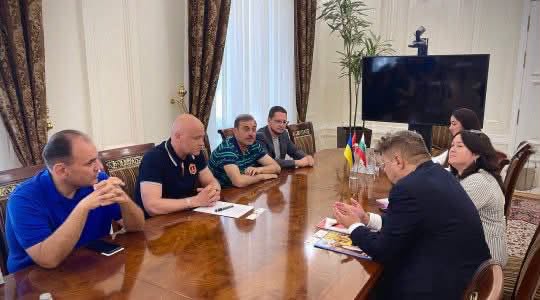
The NGO “Research Institute of Biotechnology, Ecology, Molecular and Functional Medicine” has appealed to Oleh Kiper, Head of the Odesa Regional Military Administration, requesting support for the DANUBE BIOFLOW project and assistance in identifying opportunities for its financing and practical implementation.
This was reported by the NGO’s director, Yurii Starchevskyi, according to the media outlet Pivden Sohodni.
According to him, a letter of support from the Odesa Regional Military Administration could become an important argument in communications with the organisers of the international competition and potential financial partners.
“I have decided to continue seeking funding for the DANUBE BIOFLOW project. One of the most effective ways to help secure financing for a project recognised by the competition organisers as important is to submit a letter of support from the Odesa Regional Military Administration confirming its significance for regional development. The appeal has already been sent. We expect a positive response and support,” Yurii Starchevskyi stated.
The DANUBE BIOFLOW — Danube Integrated Agro-Biological System for Water Protection, Biomethane Production and Floating Solar Energy project was submitted by a cross-sectoral consortium under the international SoS2LearnDBS Community-Led Actions competition.
The competition is implemented within the European Union Mission Restore our Ocean and Waters by 2030.
The project focuses on the Lower Danube and the Ukrainian Danube Region and envisages the establishment of an integrated agro-biological system for water protection, biomethane production and the use of floating solar energy.
Following the evaluation, DANUBE BIOFLOW received 34.8 points out of a maximum of 42.5, substantially exceeding the minimum qualifying threshold of 25.5 points. The project was officially included on the Reserve List for possible future funding.
A Comprehensive Development Model for the Danube Region
DANUBE BIOFLOW was designed as a demonstration model for the sustainable development of the Ukrainian Danube Region. It integrates:
-
protection of water resources;
-
restoration of soil fertility;
-
development of climate-resilient agriculture;
-
reduction of agrochemical pressure;
-
rational use of agricultural biomass;
-
production of biogas and biomethane;
-
use of organic fertilisers;
-
introduction of renewable energy.
The project effectively creates the basis for a circular bioeconomy in which waste generated by one production process becomes a resource for another.
One of DANUBE BIOFLOW’s priorities is to strengthen water and environmental security in the region.
The project provides for the establishment of water-protection buffer zones, the introduction of organic and biological farming methods, and systematic monitoring of water and soil conditions.
These measures are expected to reduce the discharge of nutrients, pesticides and other agrochemicals from agricultural areas into water bodies, thereby decreasing human-induced pressure on the Lower Danube ecosystems.
An important component of the project is the development of an integrated circular model for the use of agricultural biomass.
Agricultural waste and by-products may be used to produce biogas and biomethane. Digestate generated through anaerobic digestion is proposed for use as an organic fertiliser to restore soils and reduce dependence on mineral fertilisers.
The project would therefore simultaneously reduce waste, support local energy generation and improve the productivity of agricultural land.
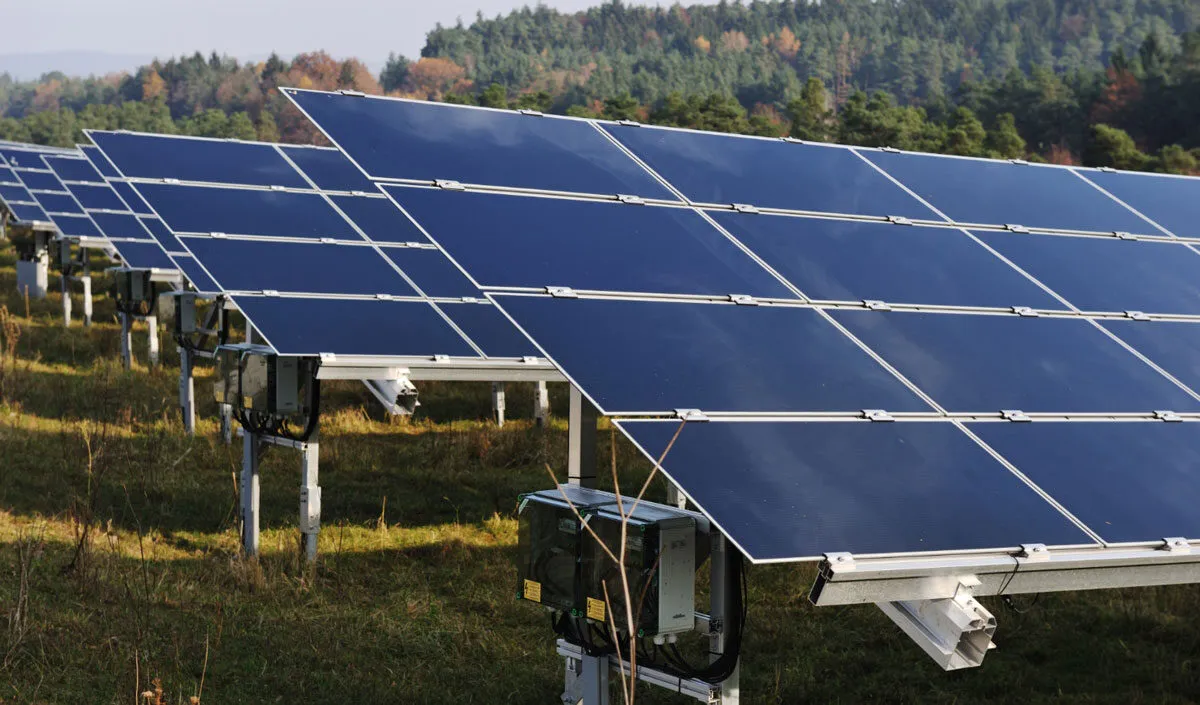
Another innovative component of DANUBE BIOFLOW is the creation of a demonstration floating solar energy installation.
The electricity generated is intended to support the operation of municipal water-management infrastructure, including pumping equipment.
“This solution demonstrates the possibility of using the surface of water bodies for local renewable energy generation and creating a more resilient model for water infrastructure in conditions of energy shortages and growing climate risks,” the project developers noted.
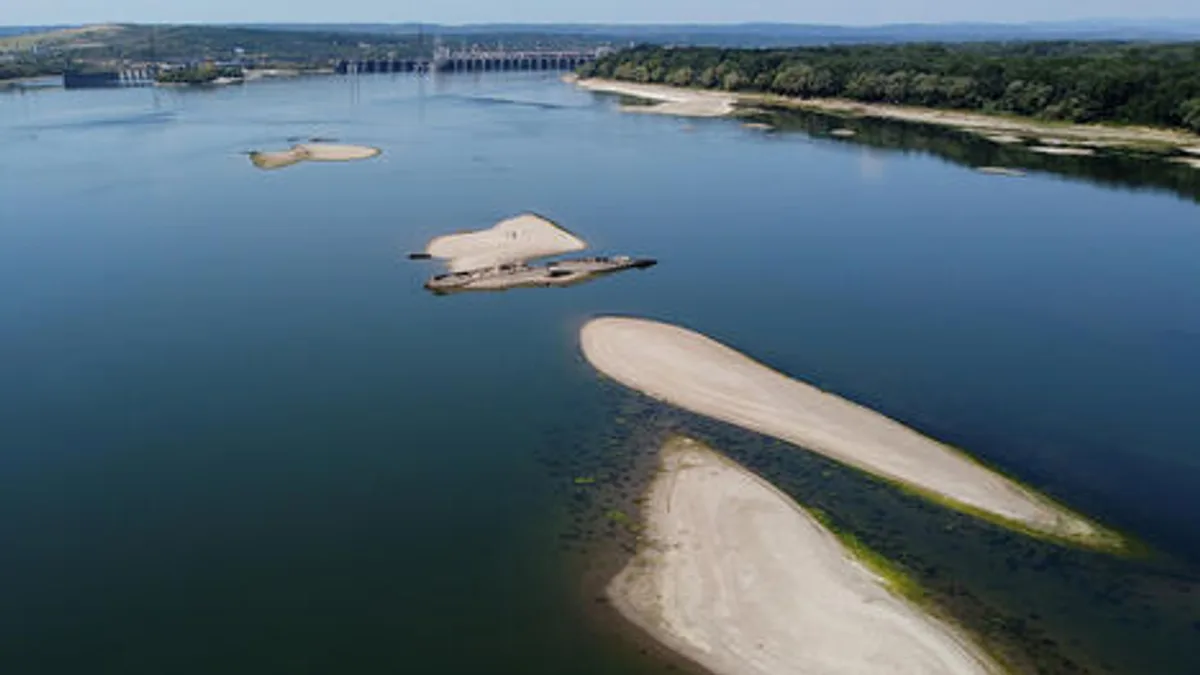
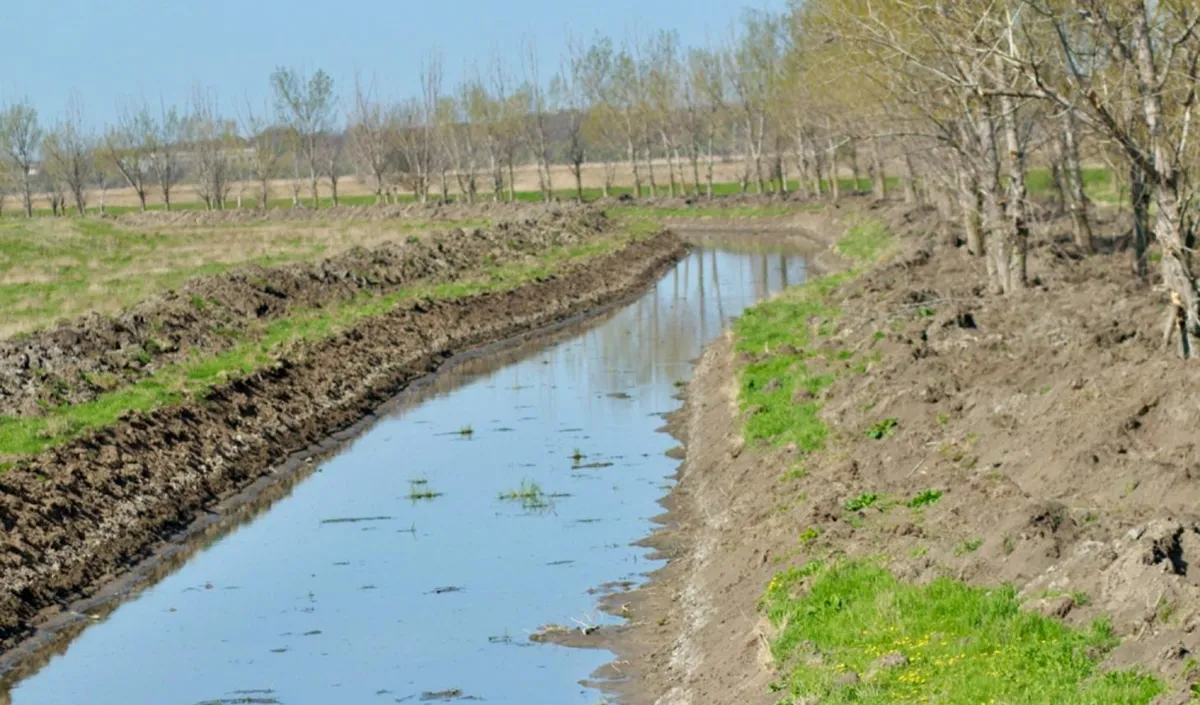
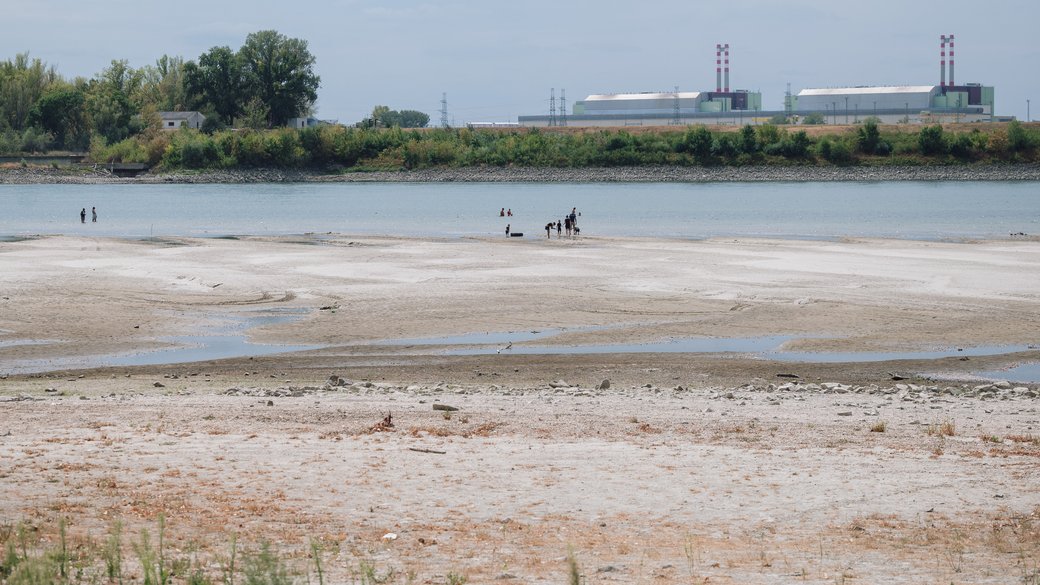
The project is particularly important for the agricultural sector in southern Odesa Region, which is increasingly affected by drought, water scarcity, soil degradation and declining water-retention capacity.
DANUBE BIOFLOW envisages technologies for restoring soil organic matter, improving soil structure, reducing the use of mineral fertilisers and developing more resilient agricultural production models.
The project’s authors describe it as a single technological and organisational chain:
“water — soil — agriculture — biomass — renewable energy — community.”
Due to its demonstration nature, the solutions developed under the project could later be scaled up and applied in other territorial communities of Odesa Region.
The cross-sectoral consortium brings together research institutions, local authorities, specialised civil society and expert organisations, agricultural producers and technology businesses.
The project is coordinated by the Institute of Climate-Smart Agriculture of the National Academy of Agrarian Sciences of Ukraine.
The consortium also includes the Bioenergy Association of Ukraine, the Research Institute of Biotechnology, Ecology, Molecular and Functional Medicine, the Katlabuh Settlement Council and other specialised organisations.
The developers emphasise that the project was prepared with the direct participation of representatives of the Ukrainian Danube Region and the local community. This approach corresponds to the Community-Led Actions concept, which assigns local communities an active role in designing and implementing project solutions.
Comment by the Institute of Danube Research
The Institute of Danube Research notes that DANUBE BIOFLOW addresses the real needs of the Ukrainian Danube Region and combines areas that have traditionally been considered separately: water-resource management, agriculture, energy, environmental protection and community development.
“The project’s principal value lies in its integrated nature. In southern Odesa Region, the problems of water scarcity, soil degradation, energy vulnerability and agricultural-waste management cannot be addressed separately. These issues are interconnected and require a unified resource-management model. DANUBE BIOFLOW offers precisely such a systemic approach,” said Vitaliy Barvinenko, Director of the Institute of Danube Research.
In his opinion, support for the project from the Odesa Regional Military Administration would have not only symbolic but also practical significance.
“An official letter of support from the regional authorities could strengthen the consortium’s position in discussions with European donors and demonstrate that the proposed solutions correspond to the region’s development priorities. At the same time, it is important not to limit efforts to an appeal to the competition organisers, but to begin exploring alternative sources of financing, including European Union programmes, international financial institutions and climate-transition funds,” Vitaliy Barvinenko emphasised.
The Institute also notes that the project could become a pilot platform for introducing European approaches to water protection, decarbonisation, the circular economy, renewable energy development and climate-resilient agriculture.
Delaying such solutions increases the risks of further deterioration in water quality, degradation of agricultural land and rising costs for communities maintaining water-management and energy infrastructure.
The implementation of DANUBE BIOFLOW could therefore be of strategic importance not only for an individual community, but also for the formation of a new sustainable development model for the entire Ukrainian Danube Region.

 Bulgaria
 Hungary
 Romania
 Moldova
 Serbia
 Danube