

Serbia and North Macedonia Join the Vertical Gas Corridor
 Serbia
08.09.2026
Serbia
08.09.2026
Serbia and North Macedonia have officially joined the Vertical Gas Corridor, extending the regional energy initiative into the Western Balkans.
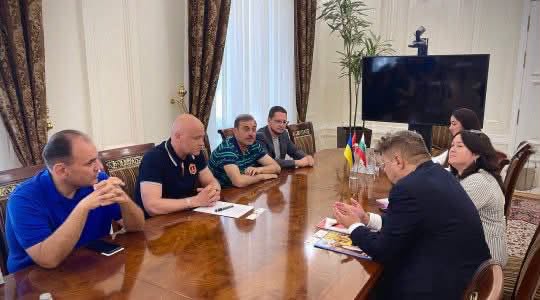
Serbian gas transmission operator Transportgas Serbia and North Macedonia’s NOMAGAS signed a Memorandum of Understanding in Thessaloniki during the 10th Southeast Europe Energy Forum.
The Vertical Gas Corridor now brings together transmission system operators from Greece, Bulgaria, Romania, Hungary, Slovakia, Ukraine, Moldova, Serbia and North Macedonia.
The initiative aims to strengthen security of supply, diversify gas sources and transportation routes, and improve interconnections between the energy markets of Southeastern, Central and Eastern Europe.
The memorandum provides for closer coordination in the development and operation of interconnected gas transmission systems, more efficient use of existing infrastructure, removal of bottlenecks, expansion of cross-border capacity and development of opportunities for bidirectional gas flows.
For North Macedonia, participation in the corridor is also linked to the development of new infrastructure, including an interconnector with Greece and plans to strengthen gas connectivity with Serbia.
Comment by the Institute of Danube Research
The expansion of the Vertical Gas Corridor to Serbia and North Macedonia reflects the gradual formation of a new gas transportation architecture in Southeastern Europe, increasingly oriented along the south–north axis.
The inclusion of the Western Balkans expands the number of potential connections between southern gas entry points, Balkan markets and Central and Eastern Europe.
At the same time, the Vertical Corridor should not be viewed as a single pipeline. It is a system of interconnected national networks and interconnectors whose effectiveness will depend on actual cross-border capacity, infrastructure development and coordinated tariff and regulatory conditions.
For Ukraine, the expansion of the corridor is strategically important, as it strengthens the southern route of access to the European gas market and may broaden supply options through Southeastern Europe. Since Ukraine’s gas transmission system is part of the Vertical Corridor, new interconnectors and bidirectional flows in the Balkans can also enhance its role in the broader European energy security architecture.
However, the accession of new participants does not automatically mean an immediate increase in physical gas flows. The practical impact will depend on removing infrastructure bottlenecks, expanding cross-border capacity and creating competitive end-to-end transportation tariffs.

 Bulgaria
 Hungary
 Romania
 Ukraine
 Moldova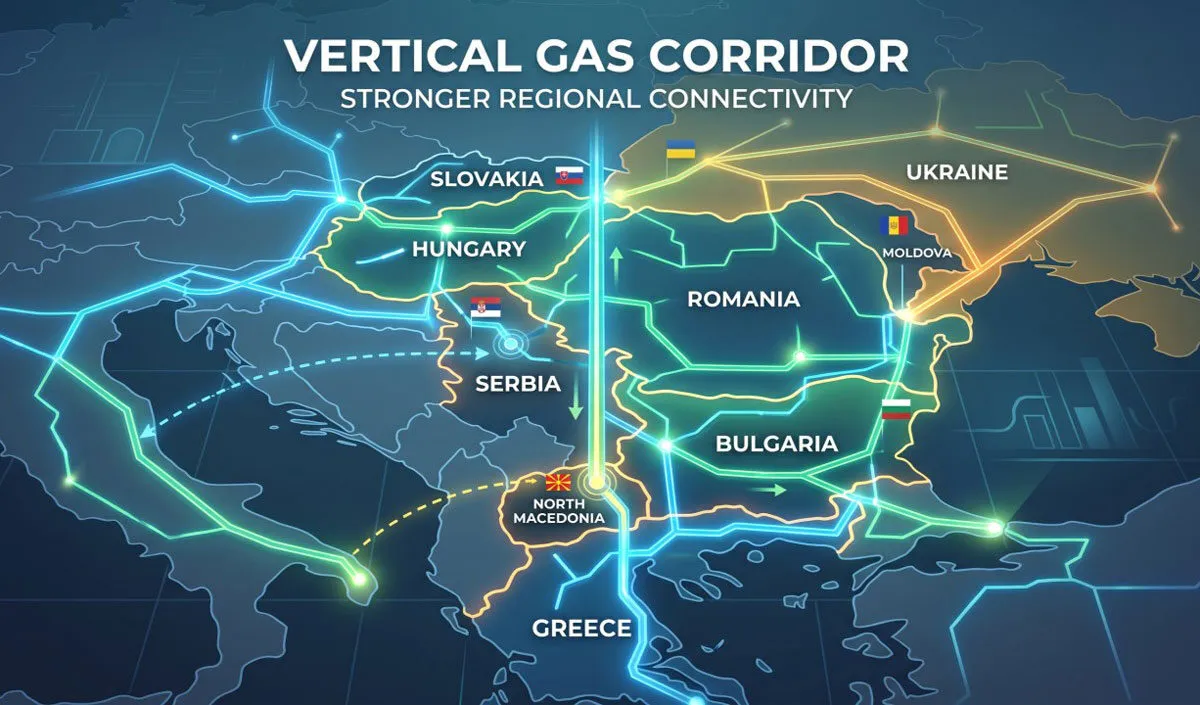

 Danube