

The Danube Parade between Ruse and Giurgiu became a symbol of cross-border cooperation on the Lower Danube
 Bulgaria
02.07.2026
Bulgaria
02.07.2026
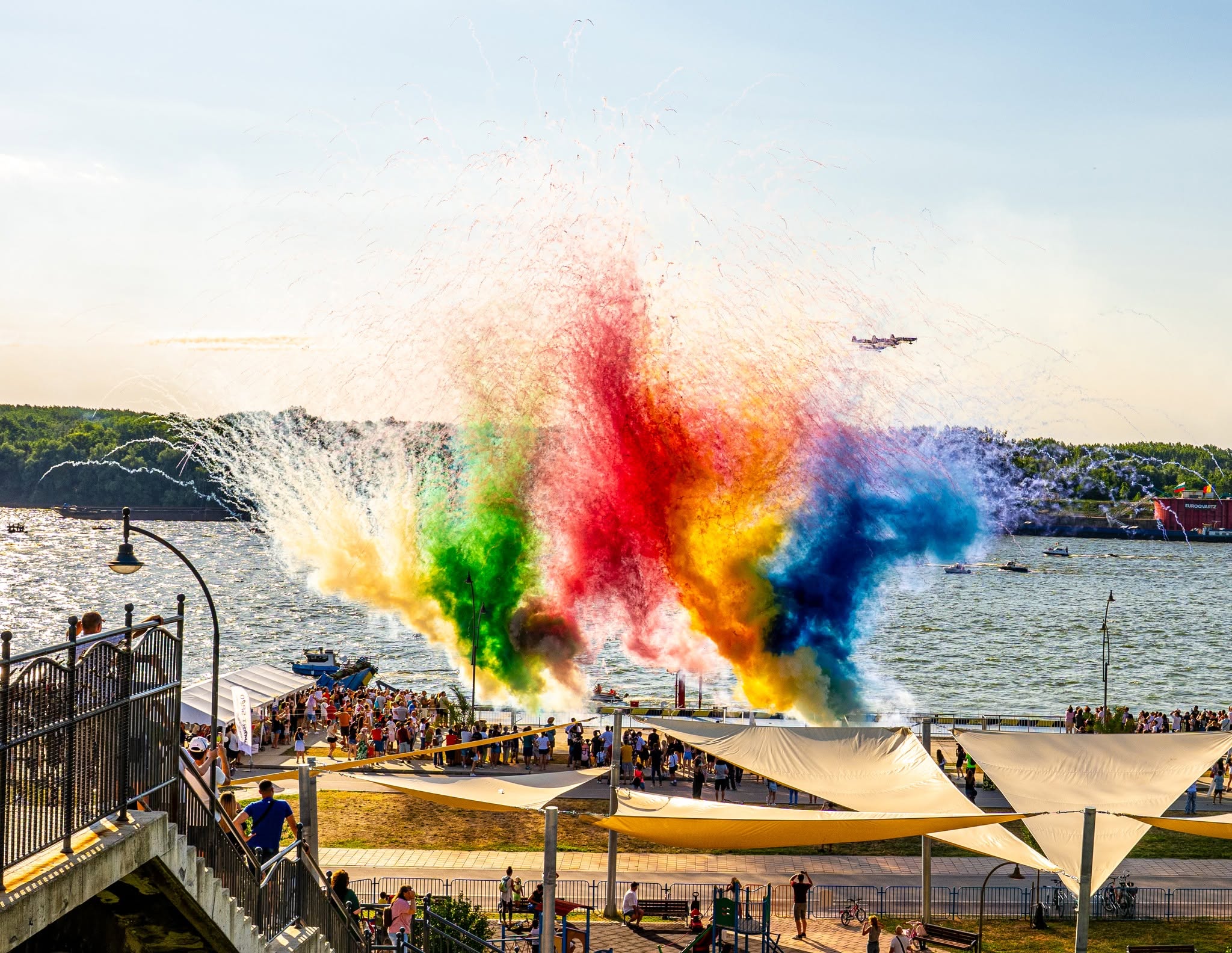
On 27 June, the Danube Parade – “Two Flags, One River” took place between the Bulgarian city of Ruse and the Romanian city of Giurgiu. This large-scale cross-border event transformed the Danube into a space of friendship, cultural interaction and shared European values.
More than 200 boats, motorboats and jet skis took part in the parade, sailing from the Friendship Bridge towards the port areas of Giurgiu and Ruse. According to the programme, the event included a river parade, an air show, concerts, festival activities and a cultural programme on both banks of the Danube.
One of the key symbolic moments was the light show on the Giurgiu–Ruse Friendship Bridge. For this purpose, traffic on the bridge was temporarily restricted, while the bridge itself became the venue for a five-minute fireworks show stretching for about 350 metres.
The air show performed by the Romanian aerobatic team Șoimii României / Hawks of Romania also attracted particular attention and became an important part of the festive programme, visible from both banks of the river.
On the Ruse riverbank, residents and visitors could enjoy concerts, animation programmes, family activities, recreation areas and gastronomic locations. A special element of the event was the presentation of Romanian and Bulgarian wines, which highlighted not only the tourism dimension, but also the cultural and economic importance of cooperation between the two Danube communities.
The event was organised by the Municipality of Ruse and the Arpatia Association, with the support of the Municipality of Giurgiu. Its format demonstrated that cooperation between local authorities, civil society and private partners can create events of not only regional but also international significance.
Comment by the Institute of Danube Research
The Danube Parade between Ruse and Giurgiu is an example of how the river can perform not only a transport or economic function, but also serve as an instrument for shaping a shared regional identity.
Such events demonstrate that cross-border cooperation should not be limited solely to infrastructure, border or logistics projects. It should also include the development of tourism, cultural diplomacy, the local economy and direct contacts between communities.
Ruse and Giurgiu have presented a model that may be useful for the wider Danube area, including Ukrainian, Romanian, Moldovan and Bulgarian communities. The Lower Danube has significant potential for developing joint tourist routes, festival events, water-based activities, gastronomic initiatives and inter-municipal partnership programmes.
Experts of the Institute of Danube Research have consistently emphasised that Ukrainian Danube communities should view the river not only as a logistics corridor, but also as a foundation for sustainable development, international cooperation and the strengthening of the region’s role in the European Danube area.
The Danube Parade – “Two Flags, One River” showed that the Danube does not divide states, but creates opportunities for their rapprochement. This approach should become one of the principles of a modern policy for the development of the Lower Danube.

 Hungary
 Romania
 Ukraine
 Moldova
 Serbia

 Danube