

Ukraine Reduces Water Releases from the Dniester Reservoir amid Critically Low Inflow
 Ukraine
28.09.2026
Ukraine has significantly reduced the volume of water released from the Dniester Reservoir into the lower reaches of the Dniester River, including the territory of the Republic of Moldova. The decision was driven by critically low natural inflow from the upper reaches of the river and the need to prevent further depletion of the reservoir.
According to the Moldovan side, the hydrological situation in the upper Dniester basin continued to deteriorate throughout September. During the first 20 days of the month, average inflow into the Dniester Reservoir was around 23 cubic metres per second, while downstream releases were maintained at approximately 60 cubic metres per second.
Moldovan Environment Minister Gheorghe Hajder previously stated that on some days inflow into the reservoir fell to around 18 cubic metres per second, while releases remained at 60 cubic metres per second. Under such conditions, water reserves accumulated in the reservoir were being rapidly depleted.
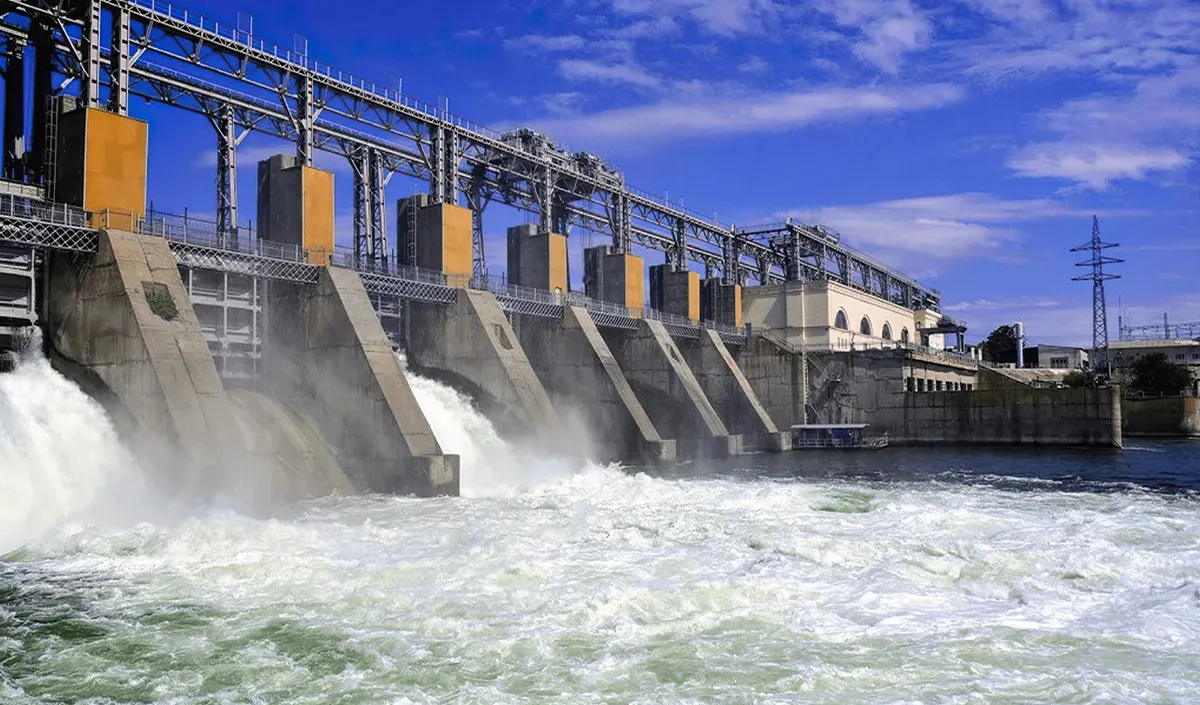
Following the reduction in releases, the Dniester Hydropower Plant has effectively shifted to a transit regime, under which the amount of water arriving from the upper basin is passed downstream without significant use of previously accumulated reserves.
This means that the ability to artificially maintain higher water flows in the lower Dniester has become substantially more limited.
The situation has raised concerns in Moldova. Chisinau Mayor Ion Ceban reported a significant decline in water levels in the northern part of the country and published photographs showing exposed sections of the riverbed.
At the same time, the water supply system of Chisinau continues to operate. Municipal authorities had previously installed floating pumping equipment and additional infrastructure that could be used if water levels in the Dniester continue to fall.
Environmental experts are also warning that prolonged low-water conditions are already affecting the Lower Dniester ecosystem. Processes of limnification — the gradual transformation of flowing river sections into weakly flowing or lake-like ecosystems — create additional risks for fish populations, aquatic habitats and biodiversity.
Comment by the Institute of Danube Research
The current situation on the Dniester indicates that the basin is entering a fundamentally more difficult phase of water-resource management.
During the previous weeks, the Dniester Reservoir was effectively compensating for the deficit in natural river flow: with inflows of approximately 18–25 cubic metres per second, downstream releases were maintained at around 60 cubic metres per second.
Such a regime could only be temporary, since it inevitably resulted in a continuous depletion of the reservoir’s accumulated water reserves.
Therefore, the current reduction in releases should primarily be viewed as a consequence of the hydrological deficit in the upper Dniester basin rather than as a separate decision aimed at restricting water supplies to Moldova.
At the same time, the transition to a transit regime means that the entire lower part of the Dniester basin — both in Ukraine and Moldova — is becoming increasingly dependent on natural precipitation in the Carpathians.
If the low-water period continues, the risks will extend beyond drinking-water abstraction and will increasingly affect the Lower Dniester ecosystem, agriculture and the stability of municipal water supply systems.
In the view of the Institute of Danube Research, the current situation once again demonstrates the need to move from ad hoc coordination of water releases toward a permanent Ukrainian-Moldovan system for forecasting and managing Dniester water resources.
Such a system should simultaneously take into account reservoir levels, expected inflows, drinking-water supply requirements and minimum environmental flows necessary to preserve the river ecosystem.
The Dniester increasingly needs to be managed as a single transboundary water system in which a water deficit in the upper reaches can directly affect the environmental and water security of downstream territories within a matter of days.
 Romania
 Hungary


 Moldova

 Bulgaria
 Danube

 Serbia