


Vylkove Community Residents Advised to Temporarily Avoid Using Danube Water for Drinking
 Ukraine
21.09.2026
The Vylkove City Council has advised residents of the community, where possible, to refrain from using water taken directly from the Danube for drinking and cooking. The recommendation is intended to minimise potential health risks and prevent acute intestinal infections. Information about the advisory was published on 21 September.
Residents are advised to give preference to water of guaranteed quality, including for household and hygiene purposes, and to monitor their health carefully.
At the same time, it is important to emphasise that the published notice does not report confirmed pollution of the Danube or cite specific laboratory results indicating dangerous levels of microbiological or chemical contaminants. The recommendation is precautionary in nature.
Residents are advised to seek medical assistance if they develop nausea, vomiting, diarrhoea, abdominal pain, fever or other symptoms of an acute intestinal infection.
The situation also warrants attention in view of the current hydrological conditions in the Lower Danube. According to the Ukrainian Hydrometeorological Center, as of 21 September, water levels along the Ukrainian section of the Danube had fallen by approximately 18–20 cm since the beginning of the month and continued to decline slowly during the previous three days, by around 1–2 cm per day.
Low water levels in themselves do not constitute evidence of deterioration in sanitary water quality. However, under such conditions, regular laboratory monitoring becomes particularly important.
The drinking-water intake in Vylkove is included in Ukraine’s state surface-water monitoring system. The Basin Water Resources Administration of the Black Sea and Lower Danube Rivers regularly conducts physicochemical analyses and collects samples at the relevant monitoring point to determine priority and specific pollutants.
Comment by the Institute of Danube Research
The Institute of Danube Research notes that, in situations involving water quality in the Lower Danube, it is essential to clearly distinguish between a preventive public-health warning and laboratory-confirmed contamination.
“A recommendation to temporarily avoid drinking untreated river water is a reasonable precautionary measure. However, the next step should be the prompt publication of laboratory test results, including specific indicators. It is essential for residents to understand whether they are dealing with a precautionary regime or a confirmed exceedance of sanitary standards,” the IDR notes.
At the same time, water taken directly from the river should not be equated with water that has undergone the required treatment process and is supplied through a centralised water system. Any conclusions regarding the safety of treated drinking water should be based exclusively on separate laboratory testing.
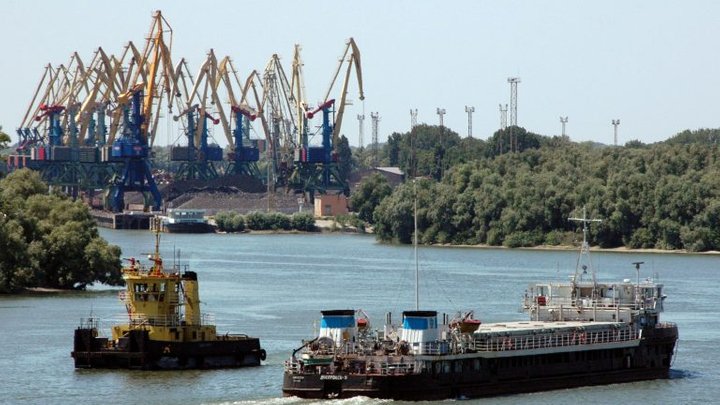
This issue is particularly important for Vylkove. The city is located directly in the Danube Delta, and the river is a critical natural resource for the community. Therefore, the local water-security system should combine regular water-quality monitoring, rapid public communication and clear response protocols in the event that deviations from established standards are detected.
The current situation once again demonstrates that water security in the Lower Danube is not only an environmental issue but also a direct social and public-safety concern. For communities in the Danube Delta, the speed of laboratory monitoring and public access to its results are no less important than the technical water-supply infrastructure itself.

 Romania

 Hungary


 Moldova




 Bulgaria
 Danube



 Serbia