

Egis Romania to prepare feasibility study for the second Danube bridge between Giurgiu and Ruse
 Romania
19.06.2026
Romania
19.06.2026
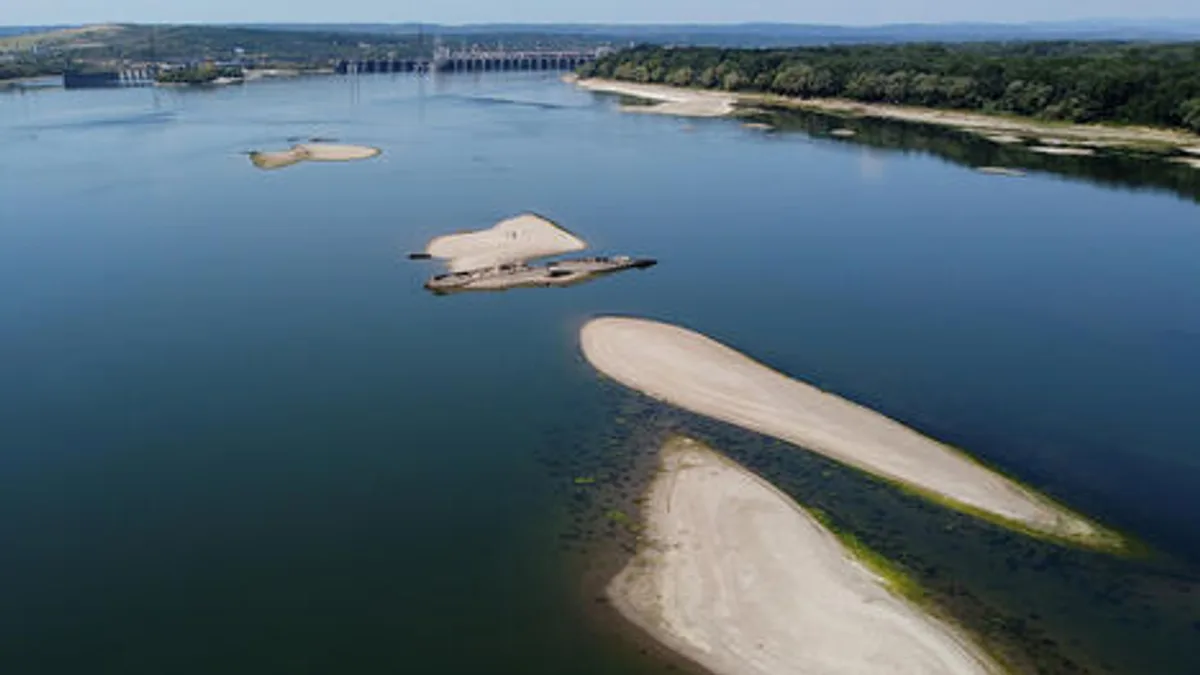
Egis Romania, a subsidiary of the French engineering and consulting group Egis, has won the tender to prepare the feasibility study for the construction of a second bridge across the Danube between the Romanian city of Giurgiu and the Bulgarian city of Ruse.
This was announced by Cristian Pistol, head of Romania’s National Company for Road Infrastructure Administration, CNAIR.
The contract is worth 50.04 million lei, or about EUR 9.56 million. It will be financed through non-reimbursable European Union funds under the Connecting Europe Facility 2 programme, within the military mobility component.
The Giurgiu–Ruse 2 bridge will have both civilian and military significance. It is expected to provide an additional road and rail connection between Romania and Bulgaria, strengthening transport resilience on one of the key routes in South-Eastern Europe.
The contract is expected to be signed in ten days, provided that no objections are submitted. After signing, Egis Romania will have 23 months to complete the feasibility study.
In January 2024, the European Commission approved EUR 6.9 million in funding for the preparation of the feasibility study for the Giurgiu–Ruse 2 bridge.
Egis has been operating on the Romanian market since 1996, providing engineering and consulting services for infrastructure projects in the fields of roads, motorways, railways, water supply, waste treatment, environment and energy, urban development, aviation and civil engineering.
Comment by the Institute of Danube Research
The Institute of Danube Research notes that the decision to prepare the feasibility study for the second Giurgiu–Ruse bridge is another confirmation of the strategic rethinking of the Danube’s role in European transport and security policy.
“Today, the Danube is increasingly viewed not only as a waterway, but as a multi-level infrastructure axis that combines logistics, trade, military mobility and cross-border resilience. The second bridge between Giurgiu and Ruse is not merely a local Romanian-Bulgarian project, but an element of a broader European connectivity architecture on the EU’s eastern flank,” said Vitaliy Barvinenko, Director of the Institute of Danube Research.
The IDR emphasizes that this project should be considered in connection with previous initiatives directly related to Ukraine. In particular, this concerns the preparation of a preliminary feasibility study for the modernization of the Odesa–Reni road and the possible construction of Ukraine’s first bridge across the Danube on the Orlivka–Isaccea route.
“The modernization of the Odesa–Reni road, the potential Orlivka–Isaccea bridge and the second Giurgiu–Ruse bridge all reflect a single logic: the Danube region is gradually becoming a space of new transport connectivity between Ukraine, Romania, Bulgaria, Moldova and the European Union. It is important for Ukraine not to remain on the periphery of these processes, but to integrate its own infrastructure solutions into the common European network,” Vitaliy Barvinenko emphasized.
The Institute draws particular attention to the fact that the Giurgiu–Ruse 2 project is financed through the military mobility component of CEF 2. This indicates a shift in the EU’s approach to transport infrastructure: roads, bridges and railway crossings are now viewed simultaneously as economic, logistical and security assets.
For Ukraine, this experience is highly relevant. Infrastructure projects in the Ukrainian Danube region should be assessed not only in terms of construction costs or current freight volumes, but also through the prism of strategic resilience, reserve routes, integration with TEN-T, military-logistical mobility and the long-term development of border communities.
“If Ukraine intends to strengthen the role of the Danube region in post-war recovery, it must think not in terms of separate facilities, but in terms of corridors. The Odesa–Reni road, Danube ports, border crossings, future bridges and railway access routes should form a single infrastructure system. This is precisely the logic that now dominates in the European Union,” the Institute of Danube Research emphasized.
Thus, the second Giurgiu–Ruse bridge project is important not only for Romania and Bulgaria. It demonstrates a broader European trend toward strengthening Danube infrastructure — a trend that directly concerns Ukraine, especially in the context of the modernization of the Odesa–Reni road, the development of Danube ports and the future integration of Ukrainian transport corridors into the European network.

 Bulgaria
 Hungary

 Ukraine
 Moldova
 Serbia

 Danube