

Shell Supplies 1 Million MWh of LNG to Bulgaria via the Alexandroupolis Terminal
 Bulgaria
14.07.2026
Bulgaria
14.07.2026
British energy company Shell has fulfilled its contract with Bulgaria’s state-owned natural gas supplier Bulgargaz for the delivery of 1 million MWh of liquefied natural gas (LNG).
The cargo was delivered to the LNG terminal in Alexandroupolis, Greece. On 13 July 2026, the transmission of regasified gas from the terminal into Bulgaria’s gas transmission network began.
The supplied gas will be injected into the Chiren underground gas storage facility and used to meet consumer demand during the 2026–2027 heating season.
Bulgargaz launched a tender for the delivery of one LNG cargo totalling 1 million MWh at the end of May. Under the procurement terms, delivery was scheduled for early July, while the principal selection criteria included price, delivery schedule and payment conditions. Forty international LNG producers and traders were invited to participate in the procedure.
The Bulgarian company has reserved long-term capacity at the Alexandroupolis terminal. Bulgargaz’s total reserved capacity at the facility amounts to approximately 10.6 million MWh per year, equivalent to nearly 1 billion cubic metres of natural gas.
Comment by the Institute of Danube Research
The delivery of a major LNG cargo through Alexandroupolis demonstrates the continued development of a new gas supply architecture in South-Eastern Europe. This system is based not on a single pipeline route, but on an interconnected network of LNG terminals, cross-border interconnectors and underground storage facilities.
For Bulgaria, the Alexandroupolis terminal, together with the Greece–Bulgaria gas interconnector and the Chiren storage facility, is gradually becoming a central pillar of a diversified energy security model. This framework enables the country to purchase gas from various suppliers, accumulate reserves during favourable market conditions and use them during peak winter demand.
At the same time, the strategic importance of this infrastructure extends beyond the Bulgarian market. The development of LNG terminals in the Aegean Sea and cross-border gas networks strengthens Bulgaria’s role as a regional transit and balancing hub for the Balkan and Danube regions.
For Ukraine, this experience is particularly relevant in the context of developing alternative natural gas import routes from the south. Greater integration of Ukrainian underground storage facilities with the gas infrastructure of Romania, Bulgaria and Greece could create additional opportunities for seasonal LNG storage, regional gas trading and stronger energy resilience across Central and South-Eastern Europe.


 Hungary
 Romania
 Ukraine
 Moldova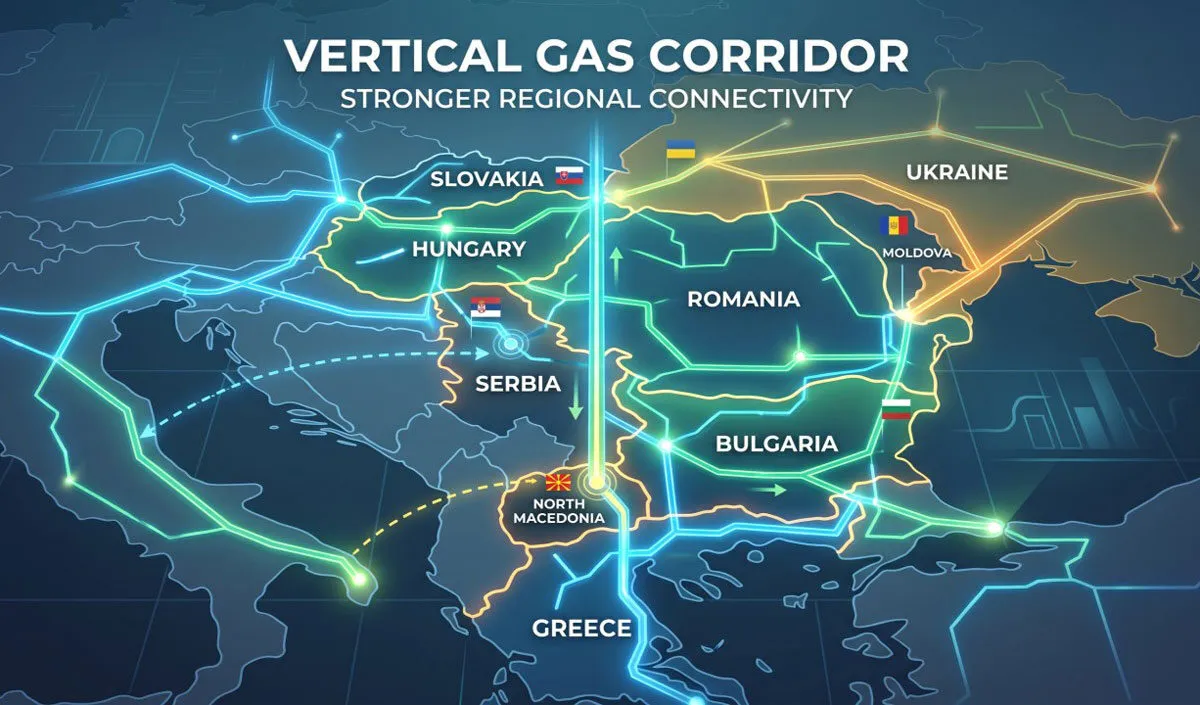
 Serbia

 Danube